1. Strategic Shift in Savoury Meal Solutions: Navigating Consumer Demands & Technical Formulation
The global ready-to-eat (RTE) and ready-to-cook (RTC) markets are undergoing a fundamental transformation. Modern consumers demand instant convenience without sacrificing nutritional density, authentic taste profiles, or clean ingredient labels. For food enterprise procurement managers, corporate chefs, and R&D formulators, developing market-leading Savoury Meal Solutions requires balancing complex physical chemistry with commercial cost-per-serving dynamics.
Whether formulating dry instant ramen sauce pouches, freeze-dried gourmet risotto kits, ultra-convenient microwaveable meal bowls, or ambient soup pots, traditional dehydrated ingredients frequently fail to meet sensory standards. Conventional hot-air drying (dehydration) subjects delicate botanical structures to prolonged thermal stress, resulting in caramelization of natural sugars, loss of volatile aromatic terpenes, cellular collapse, and leathery rehydration textures.
Technical Insight: Why Water Activity ($a_w$) & Structural Porosity Matter
In multi-component savoury meal matrixes (e.g., dry pasta mixed with vegetable inclusions and cheese powders), water activity ($a_w$) equilibrium determines shelf stability. Chaucer Foods' industrial sublimation freeze-drying process maintains structural pore integrity while reducing $a_w$ under 0.28. This eliminates moisture migration across ingredients, prevents packaging caking, and enables rapid capillary rehydration in hot water within 45 to 90 seconds.
Key Industry & Product Development Trends Driving Savoury Innovation
To maintain brand equity and capture high-margin retail shelf space, global food manufacturers are integrating several primary innovation vectors into their R&D roadmaps:
- Clean-Label Sodium Reduction: Municipal health mandates and consumer scrutiny have placed high-sodium hydrolysed vegetable proteins (HVPs) and monosodium glutamate (MSG) under pressure. Formulators are turning to concentrated freeze-dried mushroom powders, fermented savoury melts, and roasted vegetable granulates to deliver naturally occurring glutamates (umami) and nucleotides (GMP/IMP) for natural flavor enhancement.
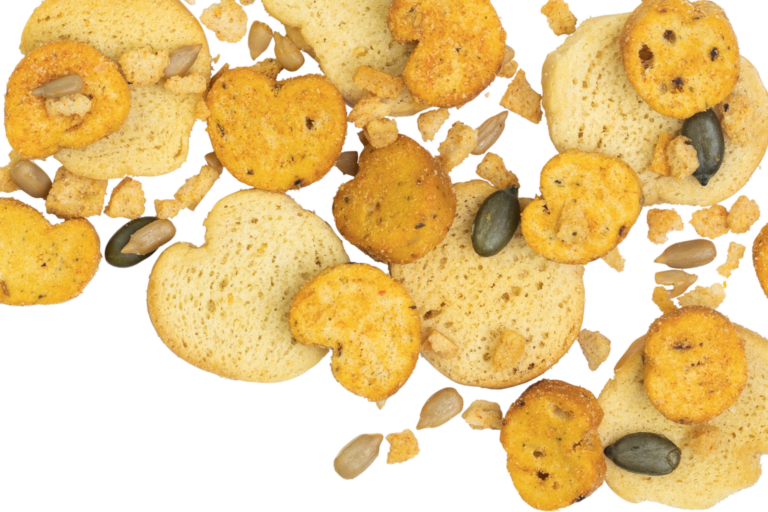
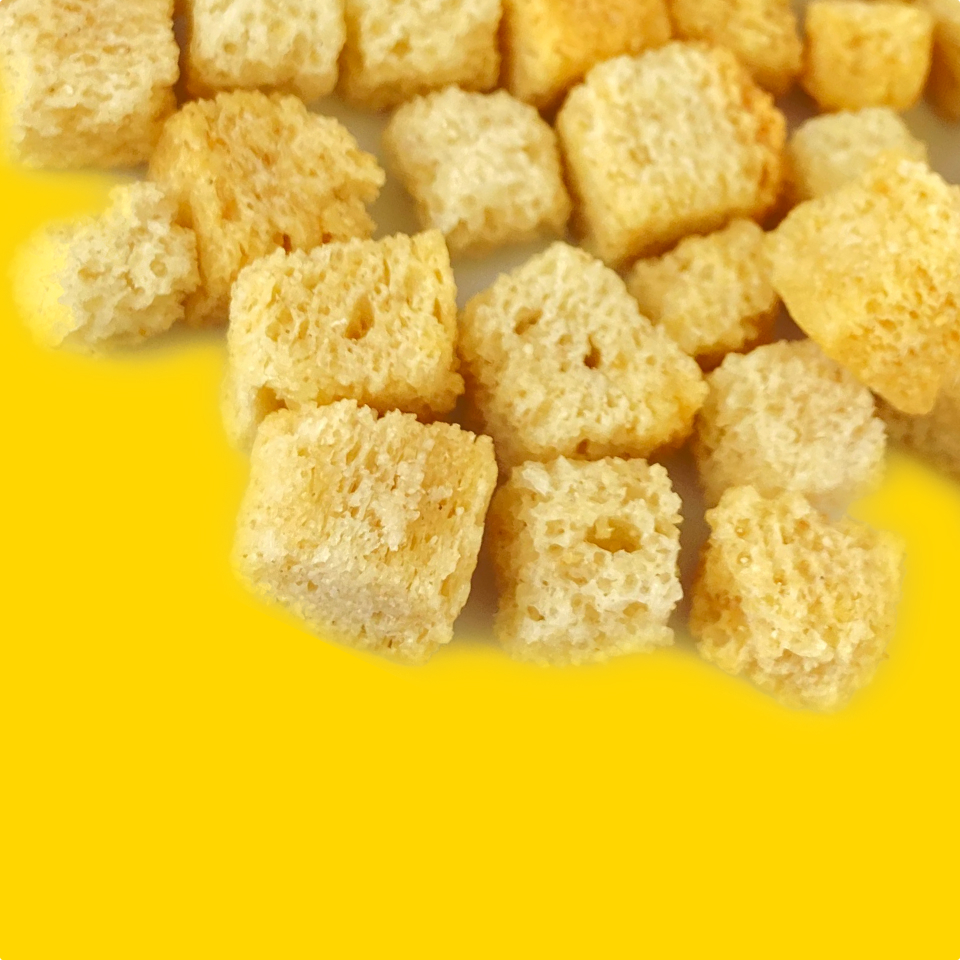
- Instant Texture Contrast in Ready Meals: Consumers judge meal quality through multi-sensory contrast—pairing smooth, hot liquids (soups, broths, gravies) with distinct, high-crunch elements. Precision-baked croutons, seasoned ciabatta crumbs, and freeze-dried real cheese cubes provide immediate textural complexity without breaking down into mush during prep.
- Plant-Based & Whole-Food Protein Enrichment: Rather than relying solely on heavily processed isolated soy protein extrudates, next-generation savoury meals incorporate freeze-dried legumes, sweet corn, broccoli florets, and real dairy/plant-based cheese melts that maintain recognizable whole-food visual identity.
- Nutrient Retention via Low-Temperature Sublimation: Heat-sensitive bioactives—such as Vitamin C in red bell peppers, glucosinolates in brassicas, and natural carotenoids—are destroyed during conventional hot-air kilning. Lyophilization preserves up to 97% of native micronutrients, enabling legitimate front-of-pack nutritional claims.