Latest News & Updates

Industry Insights & News

Stay informed with expert market trends, technical innovations in freeze-dried ingredients, and product development resources.

0%

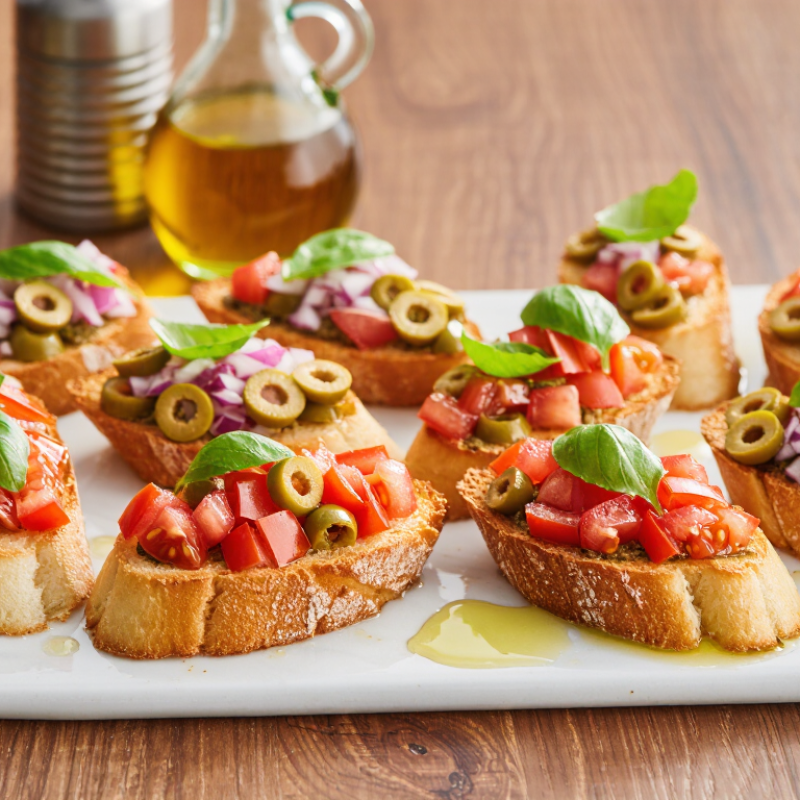
The 2026 search for the best Gourmet Baked Bruschetta suppliers requires more than attractive packaging. Buyers need crisp texture, balanced acidity, stable toppings, and dependable delivery. The category remains niche, and public datasets rarely separate baked bruschetta from wider bakery or antipasti segments. That limitation deserves attention.

Innova Market Insights’ 2024 global food trends reporting highlights consumer interest in authentic flavors, convenient formats, and recognizable ingredients. Circana’s 2024 foodservice analysis also points toward continued demand for shareable, premium snacks. These findings support Gourmet Baked Bruschetta as a practical choice for cafés, hotels, caterers, and specialty retailers. However, trend data cannot replace supplier verification. A product may look artisanal but still contain excessive salt, weak tomato flavor, or toppings that soften during storage.

Food industry expert Kantha Shelke has emphasized, “Consumers want convenience, but they do not want to compromise on quality.” That principle fits this category closely. The strongest suppliers should provide ingredient specifications, allergen controls, HACCP-based processes, shelf-life evidence, and clear baking instructions. Buyers should also test products after transport, not only at the factory. A crisp slice on day one proves little.

This guide compares 2026 suppliers through measurable details: bread structure, topping ratio, olive oil quality, packaging protection, minimum order quantities, certifications, and customer support. Some conclusions may remain imperfect because regional pricing and private-label data are often unavailable. That gap is real. It should encourage careful sampling, direct questions, and cautious purchasing rather than confident assumptions.
2026 Best Gourmet Baked Bruschetta Suppliers?

What Defines a Gourmet Baked Bruschetta Supplier in 2026

What Defines a Gourmet Baked Bruschetta Supplier in 2026

A gourmet baked bruschetta supplier begins with disciplined ingredient sourcing. Extra-virgin olive oil, ripe tomatoes, herbs, and crisp bread should remain identifiable after baking. The 2024 International Food Information Council Food & Health Survey reported that 54% of Americans followed a diet or eating pattern during the previous year. This supports demand for transparent labels, moderate sodium, and recognizable ingredients. Suppliers should publish origin details, allergen controls, nutrition panels, and batch records. Vague claims are not enough.

Food safety must be measurable. A reliable supplier should operate under a certified system, such as ISO 22000 or an equivalent audited program. The World Health Organization recommends fewer than 2,000 milligrams of sodium daily for adults. Recipes should reflect that limit without becoming bland. Small details matter: toasted edges, visible tomato pieces, sealed trays, and stable texture after reheating. Sensory testing should cover aroma, crunch, oil migration, and flavor balance.

Performance matters in real kitchens.

The best suppliers also provide practical evidence. Their products should show consistent weight, baking time, shelf-life data, and transport tolerance. The Global Food Safety Initiative’s benchmarking approach reinforces the value of third-party verification and traceable controls. However, a certificate cannot replace taste. A supplier may pass an audit yet deliver dry bread or weak seasoning. That remains an uncomfortable gap. Buyers should request samples, compare batches, and test products in the intended oven. Custom formats, clear lead times, and honest responses to defects separate dependable partners from polished sales descriptions.

Key Product Standards for Gourmet Baked Bruschetta

2026 Best Gourmet Baked Bruschetta Suppliers?

Gourmet baked bruschetta begins with disciplined ingredient standards. Fresh bread should have a firm crumb, even slices, and a clean toasted aroma. Toppings need ripe tomatoes, balanced acidity, and visible herb pieces. Excess moisture can soften the base during baking.

That small detail often separates a crisp product from a disappointing one. I would also check whether suppliers disclose ingredient origins and allergen controls clearly.

Reliable suppliers should provide measurable baking specifications. Ask about oven temperature, baking time, batch size, and cooling procedures. Consistent browning matters.

Dark edges may suggest uneven heat or overbaking. Texture should remain crisp outside while supporting a tender topping. Product samples should be tested after storage, not only when freshly packed. Packaging must resist crushing, humidity, and flavor transfer during transport.

Traceability adds practical confidence. Each batch should carry production details, shelf-life guidance, and storage instructions. Independent laboratory testing can support claims about safety and nutritional information. Certifications may help, but they do not replace direct quality checks.

A supplier’s technical team should answer questions with evidence, not vague promises. Experience matters here.

Still, no checklist is perfect. I would repeat sensory tests across several deliveries, because one excellent sample can hide inconsistent production. Shorter ingredient lists are useful, but they do not automatically guarantee better flavor.

How to Evaluate Baked Bruschetta Suppliers

2026 Best Gourmet Baked Bruschetta Suppliers?

How to Evaluate Baked Bruschetta Suppliers

Start with the product itself. Request samples from different production batches, not only a perfect showroom sample. Taste the bread after reheating, then check its texture after fifteen minutes.

Taste matters.

Look for crisp edges, balanced seasoning, and toppings that remain bright without excess oil. Ask whether ingredients are sourced consistently and whether substitutions require your approval.

Food safety records should be easy to verify. Ask for current facility certifications, allergen controls, traceability procedures, and documented temperature checks. A reliable supplier should identify the production date, lot code, storage conditions, and recommended shelf life.

Packaging also deserves attention. Inspect sealed trays, moisture barriers, labels, and carton strength during delivery. One damaged corner can affect an entire restaurant order.

Evaluate operational reliability through a small trial order. Compare promised lead times with the actual arrival date, including weekends and holiday periods. Ask how the supplier handles shortages, late deliveries, and quality complaints. Clear answers show practical experience.

Numbers can mislead.

A low unit price may hide high freight costs, heavy waste, or inconsistent portion sizes. No checklist is perfect. I would still record tasting notes, delivery temperatures, and response times in one shared file.

Suppliers who welcome questions and provide evidence deserve more confidence than those offering impressive claims without supporting records.

Leading Supplier Types and Sourcing Options

In 2026, gourmet baked bruschetta buyers can choose among three practical supplier types: artisan bakeries, specialist food manufacturers, and regional co-packers. Artisan bakeries usually offer hand-finished toppings, sourdough bases, and small production runs. Their products may show slight variation, which can signal real craft but complicate strict retail uniformity. Specialist manufacturers provide repeatable recipes, controlled baking profiles, and documented allergen procedures. Regional co-packers suit growing businesses with established recipes and larger capacity needs. Ask for production samples, not only glossy photographs.

Direct sourcing from a bakery works well for restaurants needing fresh trays within a short delivery radius. Wholesale distributors offer broader catalogs and simpler ordering, although temperature control may be less transparent. Online B2B marketplaces help compare minimum order quantities, lead times, and certifications. Yet a marketplace listing is not proof of current quality. Request batch dates, storage instructions, ingredient specifications, and recent test results. A supplier willing to explain oven temperature, cooling time, and packaging materials demonstrates useful operational knowledge. Taste the product after reheating, not just at room temperature.

For overseas sourcing, verify import documents, shelf-life performance, and language-appropriate labels before signing a contract. Build a pilot order with clear measures: crispness, topping adhesion, breakage, sodium level, and delivery condition. Keep a second supplier under review. It feels inefficient, but seasonal shortages happen. I would also question impressive claims that lack supporting records. Reliable sourcing is rarely the cheapest route, and my trial orders have shown that attractive packaging cannot rescue a soggy base.

2026 Best Gourmet Baked Bruschetta Suppliers: Supplier Types and Sourcing Options

Frozen and ambient-stable suppliers generally support longer distribution windows than fresh bakery suppliers. Shelf-life and lead-time figures are typical procurement benchmarks and can vary with recipe, packaging method, minimum order quantity, production capacity, and destination.

Questions to Ask Before Choosing a Supplier

When choosing a gourmet baked bruschetta supplier, ask how each ingredient is sourced and handled. Can they provide clear specifications for bread, tomatoes, herbs, oils, and seasonings? Reliable suppliers should explain allergen controls, sanitation procedures, and batch-tracking systems. Ask for current certificates and independent test results, not vague assurances. Details matter.

Request samples from different production batches. Check the topping’s aroma, bread texture, salt balance, and appearance after reheating. Does it remain crisp, or become oily and soft? Ask about baking temperatures, moisture control, packaging materials, and recommended storage conditions. Shelf life should be supported by documented testing. A printed date alone is not enough.

Ask how the supplier manages product changes and delivery delays. Can they maintain consistent flavor during seasonal ingredient shortages? Confirm minimum order quantities, lead times, shipping temperatures, and damage procedures. Discuss customization carefully, especially portion size and dietary requirements. Written answers are safer than friendly promises. Still, samples can mislead; one excellent batch does not prove long-term consistency. Request references from comparable food-service customers, but verify those claims independently. A capable supplier welcomes difficult questions and provides evidence without defensiveness.

2026 Best Gourmet Baked Bruschetta Suppliers? - Questions to Ask Before Choosing a Supplier

Evaluation Dimension Question to Ask Before Choosing Evidence or Data to Request Practical Benchmark Reason for Evaluation
Food Safety System Do you operate a documented HACCP-based food safety plan? Current food-safety certificate, hazard analysis, corrective-action records, and audit frequency. The plan should identify biological, chemical, and physical hazards and define monitoring procedures. A documented preventive system reduces food-safety risks during preparation, baking, cooling, and packing.
Ingredient Quality What specifications apply to the bread, tomatoes, herbs, oils, cheeses, and seasonings? Ingredient specifications, country of origin, grade information, supplier approval records, and lot-traceability details. Specifications should define measurable attributes such as size, moisture, acidity, freshness, and permitted additives. Consistent raw materials are essential for repeatable flavor, texture, appearance, and shelf life.
Allergen Control Which allergens are present, and how is cross-contact controlled? Allergen matrix, cleaning validation, production-sequencing policy, and finished-label review process. The label should clearly identify applicable allergens according to the destination market’s regulations. Cheese, wheat, and other recipe or facility allergens must be communicated accurately to protect consumers.
Baking and Product Consistency How do you control baking time, core temperature, topping distribution, and finished weight? Batch records, product specifications, weight tolerances, internal checks, and sample photos from multiple lots. The supplier should use documented process limits and verify them at defined points in every production run. Consistent baking supports predictable crispness, topping adhesion, portion size, and customer experience.
Shelf Life and Stability What shelf life is supported by testing, and under which storage conditions? Shelf-life study, packaging date, best-before date, storage instructions, and test results for texture and microbiological safety. Shelf life should be supported by documented testing rather than a standard estimate or visual inspection alone. Baked products can lose crispness through moisture migration even when they remain visually acceptable.
Packaging Performance Does the packaging protect the product from moisture, oxygen, crushing, and contamination? Packaging material specification, seal-integrity checks, transport simulation, and packaging compatibility statement. Packaging should preserve the required texture and remain intact throughout normal handling and delivery. Strong moisture and physical protection helps maintain a crisp baked base and intact toppings.
Storage and Cold Chain What storage temperature is required, and how are temperature deviations handled? Storage specification, temperature logs, carrier procedure, delivery records, and deviation-response policy. Temperature limits should be product-specific; frozen products are commonly maintained at or below -18°C during storage and transport. Temperature abuse can affect safety, texture, condensation, and the usable shelf-life window.
Traceability and Recall Readiness Can every finished case be traced back to its ingredient lots and production date? Lot-code format, one-step-back and one-step-forward records, mock-recall results, and retention period. Each shipment should carry a readable lot code linked to production and ingredient records. Effective traceability enables faster investigation and targeted action if a quality or safety issue occurs.
Capacity and Minimum Order Quantity Can you meet our forecasted volume, peak-season demand, and required minimum order quantity? Monthly capacity, lead time, minimum order quantity, production calendar, and surge-capacity policy. Capacity commitments should be stated in units or cases per production period, with assumptions clearly defined. A suitable supplier must support both routine replenishment and predictable demand increases.
Delivery Reliability What on-time-in-full performance can you demonstrate for comparable orders? Recent delivery-performance data, order-fill rate, average lead time, and documented service-level commitments. Compare suppliers using the same measurement period and define “on time” and “in full” before scoring. Reliable delivery reduces stockouts, emergency freight, missed promotions, and customer dissatisfaction.
Quality Claims and Corrective Action How are damaged, underweight, stale, or incorrectly labeled products investigated and resolved? Complaint procedure, response-time target, root-cause analysis template, replacement policy, and corrective-action examples. The process should assign responsibility, document root cause, and verify that corrective action is effective. A transparent complaint process indicates operational control and protects the buyer from recurring issues.
Commercial and Sustainability Fit Are pricing, payment terms, packaging obligations, and sustainability claims clearly documented? Written quotation, landed-cost breakdown, contract terms, packaging-recycling information, and supporting sustainability documentation. Evaluate total delivered cost, not only unit price, and require evidence for environmental or ethical claims. Clear commercial terms prevent unexpected costs and reduce the risk of unsupported marketing claims.

FAQS

What ingredients should remain noticeable after baking?

Extra-virgin olive oil, ripe tomatoes, herbs, and crisp bread should stay recognizable. The topping should not become an indistinct paste.

How can buyers evaluate food safety controls?

Ask for current certification, sanitation procedures, allergen controls, and batch-tracking records. Independent test results add useful evidence. Claims alone are weak.

What sodium information should a supplier provide?

Request a nutrition panel and compare sodium with dietary needs. Adult guidance commonly recommends staying below 2,000 milligrams daily. Recipes should remain flavorful, not merely salty.

How should product quality be tested before ordering?

Request samples from several production batches. Bake them in the intended oven and inspect aroma, crunch, oil movement, and seasoning. One excellent sample proves little.

What should the texture feel like after reheating?

The bread should have toasted edges and a stable, crisp bite. It should not become oily, soggy, or unusually hard. Texture can expose hidden moisture problems.

Which packaging and storage details matter?

Ask about sealed trays, packaging materials, storage temperatures, and transport tolerance. Shelf-life claims should come from documented testing. A printed date is not enough.

How can buyers judge supply consistency?

Review product weights, baking times, lead times, and batch records. Ask how seasonal shortages affect ingredients and flavor. Consistency may still fail occasionally.

What questions should buyers ask about customization?

Confirm portion sizes, dietary requirements, minimum orders, delivery schedules, and damage procedures. Request written answers for important terms. Friendly promises can change.

Conclusion

Choosing the best Gourmet Baked Bruschetta supplier in 2026 requires more than comparing prices. A reliable supplier should offer consistently fresh ingredients, balanced flavors, crisp yet stable bread, attractive presentation, and dependable baking quality. Product standards should also include clear ingredient information, suitable packaging, appropriate shelf life, and careful handling throughout production and delivery. Suppliers that can provide flexible recipes, portion sizes, and packaging formats may be better suited to different foodservice, retail, and event needs.

When evaluating options, buyers should review production capacity, quality-control procedures, delivery reliability, customization services, and overall value. Sourcing may include specialist food producers, wholesale distributors, local commercial kitchens, or direct manufacturers, depending on order volume and business goals. Before choosing a supplier, it is important to ask about minimum order quantities, lead times, storage requirements, allergen controls, sample availability, replacement policies, and communication processes. A strong supplier should demonstrate consistency, transparency, responsiveness, and the ability to maintain product quality as demand grows.

Amelia

Amelia

Amelia is a seasoned marketing professional with a deep expertise in our company’s innovative products and services. With a keen eye for detail and a passion for storytelling, she plays a pivotal role in shaping our brand’s narrative through expertly crafted blog articles on our corporate website.......