Industrial Confectionery Formulation: Overcoming Technical Barriers with Advanced Ingredients
In modern commercial confectionery manufacturing, formulating shelf-stable, organoleptically superior products requires far more than balancing sweetness and fat. Procurement executives, master chocolatiers, and R&D directors face complex physicochemical challenges—primarily centered around water activity ($a_w$) control, lipid oxidation, texture loss, and color degradation. When integrating real fruit, crunch elements, or clean-label colorants into high-cocoa chocolate bars, aerated chews, praline fillings, or pectin-based gummies, standard dehydrated or fresh fruit ingredients consistently fail due to excessive unbound moisture and structural collapse.
Selecting high-performance confectionery recipe ingredients demands an intricate understanding of thermodynamic equilibria between inclusions and surrounding substrate matrices. As global consumers pivot away from artificial flavors and synthetic Azo dyes toward clean-label, functional confectionery featuring authentic tartness and rich visual appeal, ingredient specification has become a strategic competitive lever.
Technical Information Gain: The Mechanics of Moisture Migration in Chocolate Inclusions
When an inclusion possessing an $a_w$ above 0.35 is embedded in tempered chocolate ($a_w \approx 0.15 - 0.20$), water molecules spontaneously migrate along the chemical potential gradient. This free water dissolves localized sucrose crystals, creating a saturated sugar syrup. As this syrup wicks to the surface and evaporates, it leaves behind a white, powdery crystalline film known as sugar bloom. Simultaneously, localized water absorption by cocoa butter disrupts the polymorphic Form V ($\beta_V$) crystal structure, expediting fat bloom. Chaucer Foods’ low-moisture freeze-dried fruit inclusions resolve this fundamental physical instability by locking water activity below $a_w 0.20$.
Established in 1971, Chaucer Foods has pioneered global industrial freezing and sublimative dehydration technology. By controlling grain size, pore structure, and thermal conductivity during vacuum lyophilization, we engineer industrial confectionery recipe ingredients that maintain crunch, vibrant chromaticity, and intact nutritional profiles throughout a 12 to 24-month ambient shelf life.
High-Performance Confectionery Recipe Ingredients: Industrial Product Recommendations
Global buyers searching for scalable, reliable inclusions must match specific confectionery bases with the optimal ingredient morphology, water activity profile, and physical geometry. Below are engineered product solutions designed specifically for high-throughput confectionery lines.
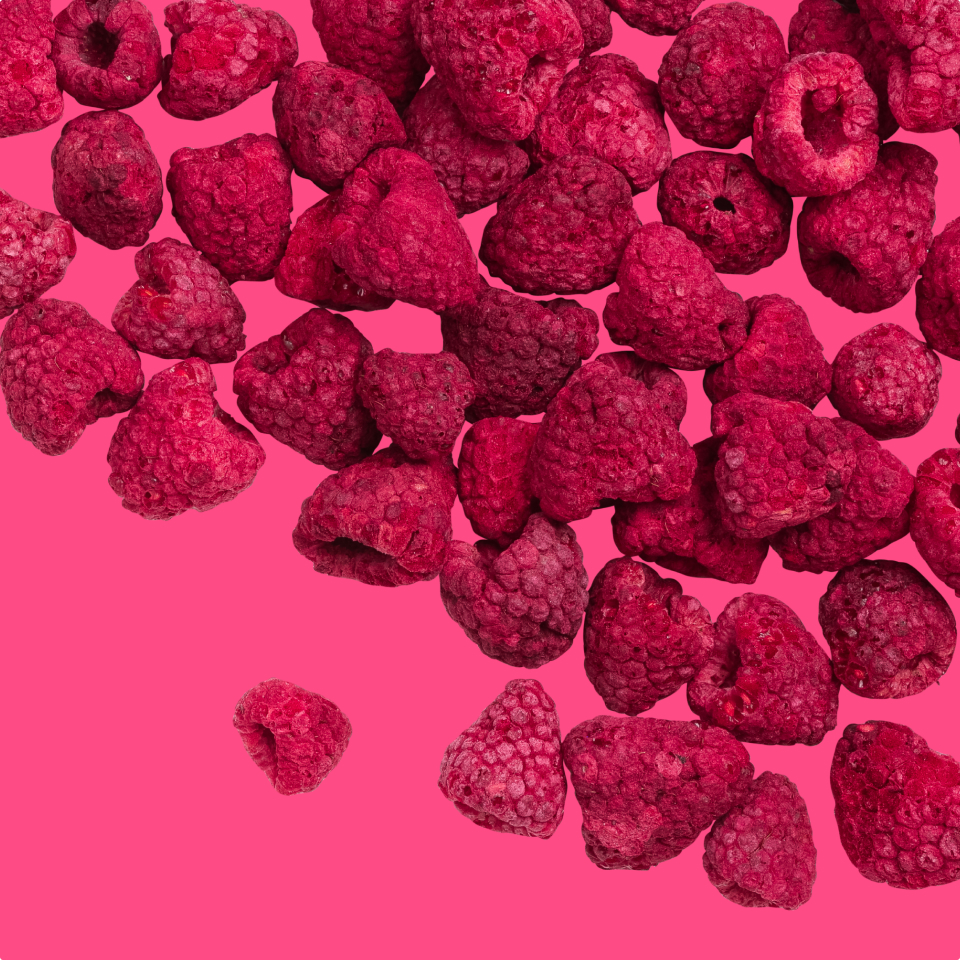
Freeze-Dried Raspberry Whole, Slices & Crumbs
Derived from premium heritage cultivars, our freeze-dried raspberries provide an intense, natural tartness that cuts through rich milk and dark chocolate profiles. Sublimation preserves the native cell wall matrix, preventing collapse under enrobing pressures.
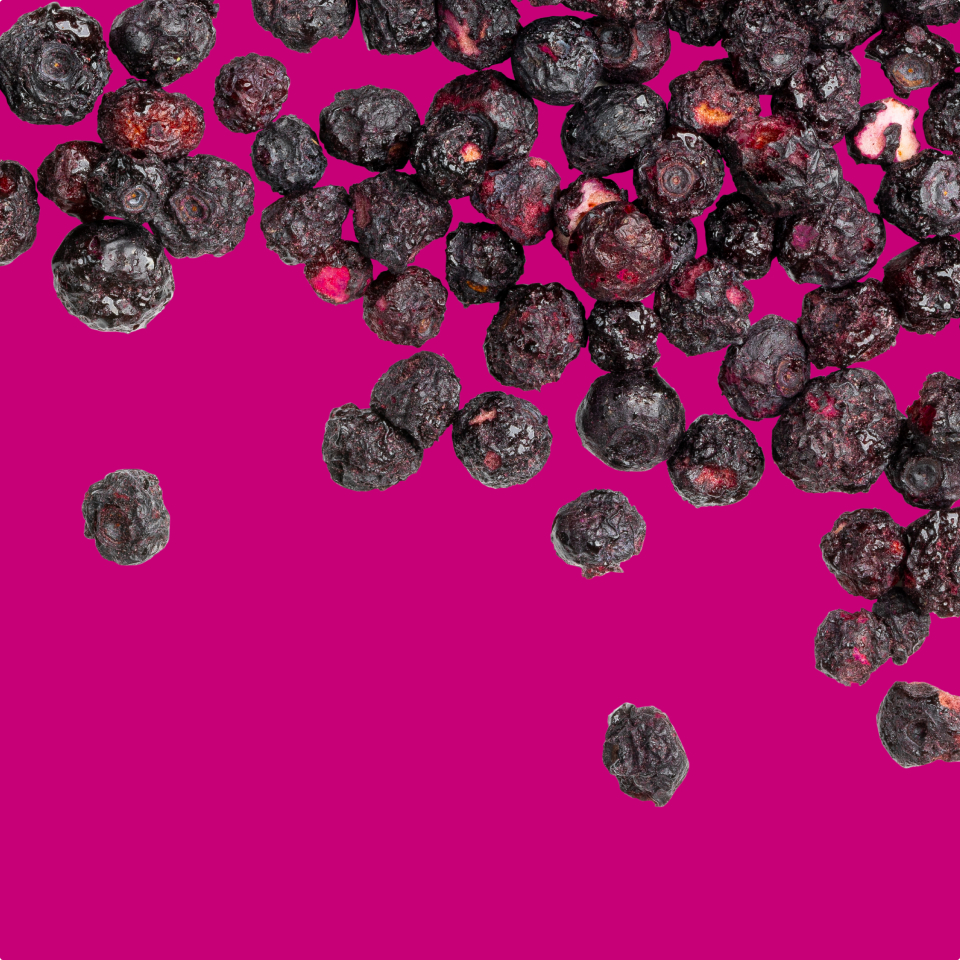
Freeze-Dried Whole Blueberries & Micro-Pellets
Whole freeze-dried blueberries retain intact epidermal skins, preventing anthocyanin bleeding into pale white chocolate or compound coatings. Ideal for panned confectionery, artisan slabs, and high-fiber fruit chews.
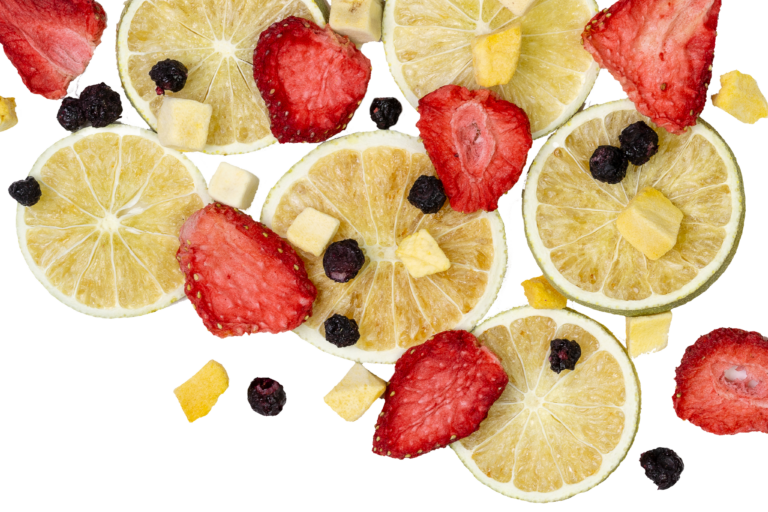
Freeze-Dried Citrus & Exotic Tropical Slices
Including freeze-dried orange, lime, kiwi, and dragon fruit pieces into confectionery recipes infuses natural volatile terpene aromatics without adding water-phase hydrolytic rancidity risks to fat continuous phases.
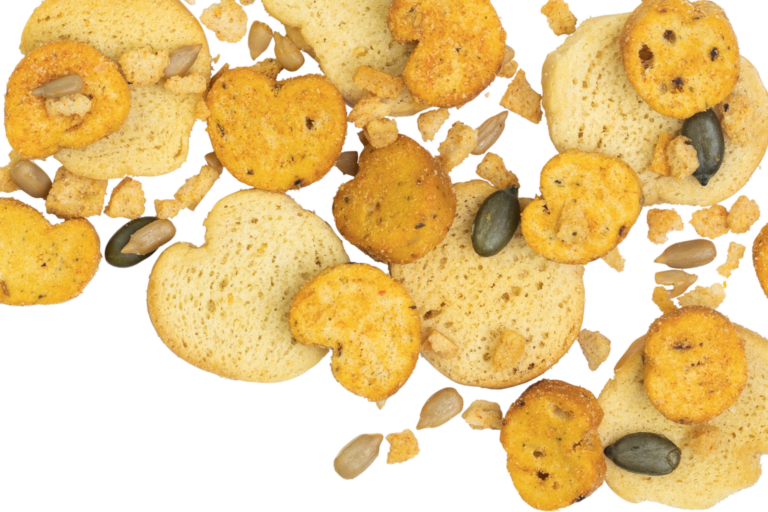
Artisan Baked Biscuit Sprinkles & Crunch Crumbs
Beyond fruit, modern confectionery relies heavily on crunch contrast. Our custom-baked wheat and gluten-free crumbs feature engineered oil-absorption indices, enabling them to remain crisp even inside fat-rich praline paste.
Comparative Technical Specification Matrix for Confectionery Formulators
To streamline R&D evaluation, the following matrix compares physical, chemical, and performance metrics across key confectionery recipe ingredients supplied by Chaucer Foods:
| Ingredient Category | Target $a_w$ Range | Glass Transition ($T_g$) | Moisture Migration Risk | Primary Confectionery Fit |
|---|---|---|---|---|
| Freeze-Dried Berry Crumbs (Raspberry/Strawberry) | 0.15 – 0.22 | > 35°C | Negligible (Extremely Low) | Chocolate tablet bars, enrobed truffles, dry panning |
| Whole Freeze-Dried Fruit (Blueberry/Blackberry) | 0.18 – 0.25 | > 40°C | Low (Epidermal skin protection) | Premium panned chocolate, artisan slabs, nougat inclusions |
| Specialty Fruit Powders (100-Mesh) | 0.12 – 0.18 | > 30°C | Requires low-RH handling | Natural chocolate coloring, gummy dusting, cream fillings |
| Hydrophobic Baked Crumbs (Ciabatta/Biscuit) | 0.20 – 0.30 | N/A (Crystalline matrix) | Ultra-low (Fat-barrier coated) | Praline pastes, layered wafer bars, crunchy truffles |
| Freeze-Dried Snack Melts (Dairy/Fruit Base) | 0.15 – 0.20 | > 45°C | Very Low | Better-for-you toddler confectionery, functional drops |
Future Procurement Trends in Confectionery Ingredients
AI-driven predictive analysis of procurement search data reveals a dramatic shift in how enterprise buying teams select confectionery raw materials. Supply chain resilience, carbon accounting, and technological compatibility now dominate procurement scorecards alongside unit pricing.
1. Transition to Clean-Label & Natural Botanical Colorants
Regulatory pressures across North America and the European Union—specifically restrictions on titanium dioxide (E171) and synthetic red dyes (Red 40, Allura Red)—have forced industrial candy makers to search for natural alternatives. Micro-milled freeze-dried dragon fruit, beet, and red raspberry powders provide vibrant, stable chromaticity with zero synthetic additives. Procurement leaders are increasingly locking in long-term supply agreements for whole-fruit powders that perform dual functions: color enhancement and natural fruit flavor labeling.
2. Precision Water Activity Specification ($a_w < 0.20$)
High-speed automated packaging lines cannot tolerate humidity-induced caking or sticky inclusions that clog volumetric hoppers. Enterprise procurement teams now stipulate narrow $a_w$ micro-tolerances within vendor contracts. Sublimation drying processes calibrated to maintain precise equilibrium moisture contents eliminate production downtime and guarantee consistent flowability through multi-head weighers.
Glass Transition Temperature ($T_g$) & Caking Dynamics
When fruit inclusions absorb atmospheric moisture during factory handling, their $T_g$ drops below ambient factory temperatures (typically 20-22°C). Once $T_{ambient} > T_g$, the sugar matrix transitions from an amorphous glass to a viscous rubbery fluid, causing instant agglomeration and caking. Chaucer Foods packs all industrial confectionery recipe ingredients in aluminum foil moisture-proof liners flushed with inert gas to preserve $T_g$ integrity during global transit.
3. Scope 3 Emissions & Fully Traceable Supply Chains
Tier-1 global confectionery corporations are under mandate to reduce Scope 3 carbon footprints across their agricultural supply networks. Sourcing fruit ingredients from audited, sustainable farming cooperatives with verified crop-tracing protocols has evolved from a marketing benefit to an absolute procurement prerequisite.
Broader Industry Development Trends in Confectionery Formulation
Functional Confectionery & Mindful Indulgence
The line between dietary supplements and traditional confectionery continues to blur. Pectin gummies, functional chocolates, and active botanicals demand ingredients that maintain bio-active retention. Freeze drying preserves up to 97% of native vitamin C, polyphenols, and antioxidant flavonoids within berries and tropical fruits. Formulators can cleanly claim "real fruit nutrition" on packaging while fortifying products with adaptogens, fiber, or vitamins.
Textural Complexity: The "Crunch & Melt" Dual-Sensory Paradigm
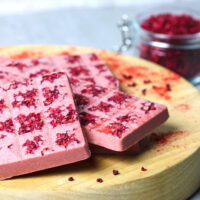
Sensory consumer research demonstrates that dual-texture confectionery—combining smooth fat-continuous chocolate with sharp, aerated crunch—scores significantly higher in consumer preference tests than single-texture products. Combining custom-baked biscuit crumbs with freeze-dried fruit pieces delivers a complex, multi-stage release of sensory attributes: initial crisp bite, followed by fruit acidity, culminating in smooth cocoa melt.
Sugar-Reduced Formulation Support
When removing bulk sugar (sucrose) from confectionery recipes and replacing it with polyols (maltitol, erythritol) or soluble corn fiber, sensory profiles often suffer from lingering artificial sweetness or cooling effects. Incorporating freeze-dried fruit inclusions introduces immediate, authentic bursts of organic fruit acids (citric and malic acid), which mask polyol off-tastes and rebalance the overall flavor profile naturally.
Frequently Asked Questions: Technical Sourcing & Procurement
Below are authoritative answers to the most common queries submitted by global procurement officers, QA managers, and food scientists searching for industrial confectionery recipe ingredients.
Freeze-dried fruit inclusions undergo vacuum sublimation, removing over 98% of bound and free water without disrupting the fruit's cellular architecture. This yields a ultra-low water activity level ($a_w \le 0.20$). Because the water activity of the inclusion matches or falls below that of tempered chocolate ($a_w \approx 0.15 - 0.20$), no vapor pressure gradient exists to drive moisture transfer. Without free moisture migration, localized sucrose dissolution is completely prevented, eliminating sugar bloom and preserving cocoa butter crystal polymorphism over long shelf lives.
In fat-continuous systems (chocolate, compound coatings, nut pastes), inclusions must maintain an $a_w \le 0.25$ to avoid initiating lipid hydrolysis and fat bloom. In sugar-continuous or hydrocolloid systems (hard candies, pectin gummies, low-moisture chews), the system's baseline $a_w$ dictates ingredient choice. For high-moisture gummies ($a_w \approx 0.55 - 0.65$), standard freeze-dried fruits will soften over time unless pre-treated with protective hydrophobic coatings or used as exterior dry-dusting accents.
Maintaining crispiness requires a multi-layer protective strategy: First, specify inclusions dried to sub-0.20 $a_w$. Second, utilize fat-barrier encapsulation (such as coating fruit pieces or baked crumbs in cocoa butter or palm kernel oil fractions prior to incorporation). Third, mandate packaging materials with high water vapor transmission rates (WVTR < 0.1 g/m²/24h), such as metallized PET or aluminum foil laminates.
Chaucer Foods offers custom particle size engineering. We supply whole fruits, slices (2-5mm), precision dice (3x3mm, 6x6mm, 10x10mm), coarse crumbs (1-3mm), and fine powders (60-100 mesh). All grades undergo tight mechanical sifting and optical sorting to guarantee uniform bulk density and zero oversize or undersize contamination in automated volumetric depositors.
Natural raw materials inherently fluctuate across harvests. Chaucer Foods mitigates crop variance by managing a globally diversified grower network across northern and southern hemispheres. We analyze incoming raw crops for Brix, titratable acidity, pH, and spectro-photometric color parameters. Through scientific blending of verified crop batches, we deliver standardized industrial specifications that ensure your final confectionery recipes taste and look identical year-round.
Every production lot is released with a comprehensive Certificate of Analysis (CoA) detailing moisture percentage, water activity, microbiological limits (salmonella, listeria, total plate count, yeast/mold), particle sizing compliance, and heavy metal testing. Full allergen declarations, Non-GMO statements, Kosher/Halal certification copies, and nutritional breakdown sheets are standard.
Enterprise Strengths: Why Global Brands Partner with Chaucer Foods
When specifying confectionery recipe ingredients for global distribution, technical performance must be backed by institutional reliability, uncompromising food safety, and massive manufacturing scale. For over five decades, Chaucer Foods has served as the preferred B2B ingredient engineering partner to the world’s leading retail, confectionery, and foodservice brands.
50+ Years of Specialization
Founded in 1971, Chaucer Foods brings unmatched heritage and deep process expertise in vacuum freeze-drying and specialty baking technologies, ensuring seamless integration into your production lines.
GFSI & BRCGS Grade AA Plants
Our manufacturing facilities worldwide operate under the strict benchmark of BRCGS Grade AA and IFS certifications, providing 100% batch traceability, environmental pathogen monitoring, and foreign material prevention.
Global Production Across 6 Continents
With strategically positioned manufacturing sites and dual-sourced raw material channels globally, we protect your supply chain against regional crop failures, tariff disruptions, and logistics bottlenecks.
Dedicated R&D & NPD Pilot Labs
Our specialized food technologists work directly with your formulation team—providing rapid benchtop prototyping, pilot-scale test batches, and custom moisture-barrier coating solutions tailored to your unique recipes.
Sustainably Sourced & Ethical
We prioritize sustainable agricultural practices, working towards carbon footprint reduction, zero farm-waste utilization, SEDEX/SMETA ethical labor audits, and RSPO-certified sustainable palm options.
Custom Packaging & Bulk Formats
From nitrogen-flushed bulk bag-in-box configurations for automated plant feeding to ready-to-use retail sachets, our packaging capabilities are built around your operational convenience.
Accelerate Your Confectionery Innovation Today
Partner with Chaucer Foods to solve your toughest formulation challenges. Request custom ingredient samples, technical data sheets, or schedule a technical consultation with our senior food science team.