Industry Insights & News
Stay informed with expert market trends, technical innovations in freeze-dried ingredients, and product development resources.

What Are the Best Baked Soup Croutons from China?
Table of Contents
- What Defines Chinese Baked Soup Croutons: Ingredients, Size, and Texture
- China’s Bakery Market: Euromonitor Demand and Production Trends
- Baking, Drying, and Moisture Control Under Codex Quality Guidance
- Comparing Chinese Suppliers Through HACCP, ISO 22000, and Export Data
- Ranking Croutons by Flavor, Crispness, Shelf Life, and Cost Metrics
- FAQS
- Conclusion
- Related Posts
What Are the Best Baked Soup Croutons from China? This question deserves more than a quick supplier list. China’s baked snack and bakery manufacturers offer many crouton styles, from pale garlic cubes to deeply toasted whole-wheat pieces. Their differences appear in the bowl. Some stay crisp beside thick pumpkin soup, while others soften within minutes.
Food scientist Dr. Kantha Shelke has said, “Texture is a major part of the eating experience.” That principle guides this comparison of Baked Soup Croutons. We will examine bread quality, baking consistency, seasoning balance, oil use, package protection, and supplier reliability. A good crouton should smell toasted, not burnt. Its surface should feel dry, while the center keeps a gentle bite.
Small details matter. A 10-millimeter cube can distribute flavor evenly across a spoonful. Excess salt can overwhelm a mild broth. Weak packaging may allow humidity to destroy the crunch before delivery. China’s strongest producers often combine controlled baking temperatures with clean ingredient handling and practical export documentation. Still, factory scale alone proves little.
Taste can be subjective. Testing conditions can also be imperfect. A crouton judged in tomato soup may perform differently in seafood chowder. Therefore, this guide considers both sensory performance and purchasing evidence. Samples, production records, certifications, and transparent communication should support every recommendation. The best Baked Soup Croutons are not simply the darkest or crispiest. They should remain appealing, dependable, and suitable for the soup they accompany.
What Defines Chinese Baked Soup Croutons: Ingredients, Size, and Texture
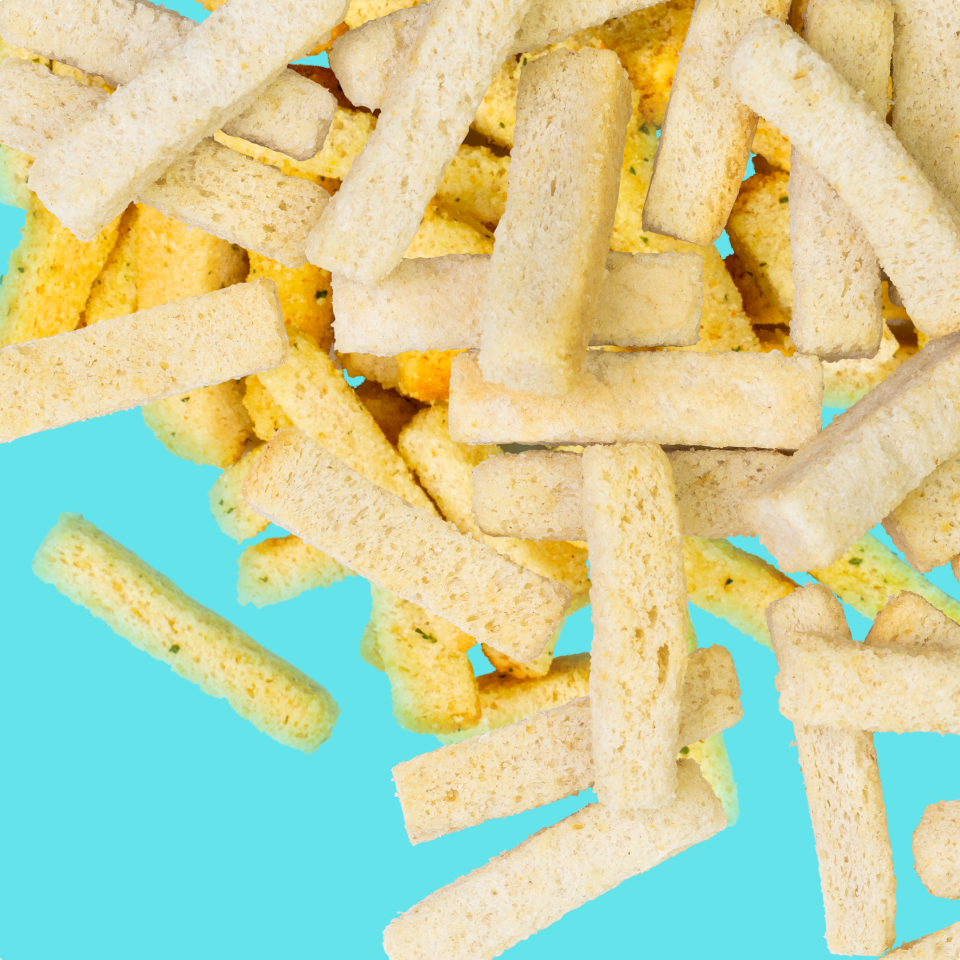
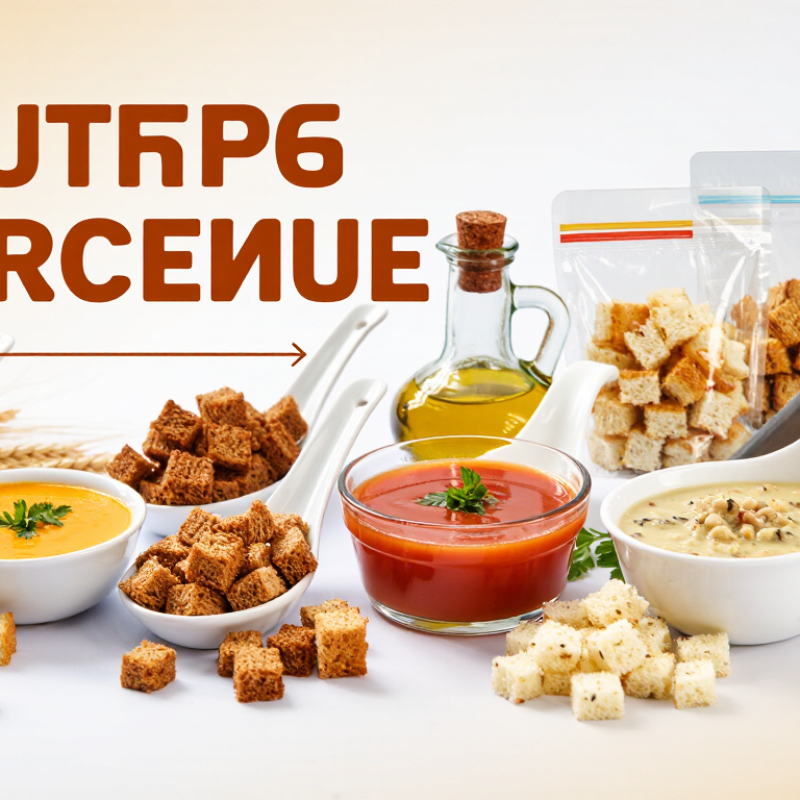
When evaluating baked soup croutons from China, I look closely at ingredients, size, and texture. A dependable formula usually starts with wheat flour, vegetable oil, salt, and mild seasoning. Garlic, onion, pepper, or dried herbs may add a clearer savory note. The ingredient list should be short and easy to verify. Artificially strong flavors can hide stale or poorly baked pieces.
Size affects both presentation and eating quality. Pieces around 8 to 15 millimeters usually work well in soup. Smaller cubes soften quickly and may disappear in thick broth. Larger pieces offer more crunch, but they can feel awkward on a spoon. Uniform cutting matters. It helps each cube bake evenly and absorb liquid at a similar rate. In practice, I have seen slight size differences, even in carefully packed samples.
Texture is the real test. A good baked crouton should feel crisp when dry, with a light, porous center. After several minutes in hot soup, it should soften outside while keeping some structure. That balance is difficult. Too much oil creates a heavy bite, while too little moisture control causes a hard center. I also check aroma, breakage, packaging, and production records. Laboratory moisture testing and traceable batches improve reliability. No sample is perfect. A few uneven pieces are acceptable, but frequent burnt edges suggest weak process control.
What Are the Best Baked Soup Croutons from China?
Chinese baked soup croutons are generally defined by a wheat-based recipe, light vegetable oil, yeast, salt, and optional sugar or spices. The chart compares common product formats by cube size and finished moisture, two practical indicators of soup performance and texture.
Smaller cubes soften faster, while larger cubes preserve their crunch for longer. A finished moisture level of approximately 3–5% is typical for a crisp baked texture. The best choice depends on whether the soup requires quick absorption or longer-lasting crunch.
China’s Bakery Market: Euromonitor Demand and Production Trends
China’s bakery market is becoming more varied, and baked soup croutons are gaining attention as a practical extension of this growth. Euromonitor demand and production trends point toward stronger interest in convenient, portion-controlled bakery ingredients. Urban consumers often prefer products with crisp texture, clean labeling, and easy storage. Small cubes with even browning work well in creamy soups, while larger pieces create a more noticeable crunch. The best Chinese croutons should resist moisture for several minutes without becoming hard or oily.
Production is also moving toward greater consistency. Bakeries are improving slicing, drying, seasoning, and packaging processes to reduce breakage and preserve freshness. Garlic, herb, butter-style, and mild savory profiles can match different soup recipes. However, “premium” does not always mean better. Some heavily seasoned products hide weak bread quality. I would check the crumb structure, oil absorption, and aroma after heating. A sample may look attractive but soften too quickly in real soup.
Tips: Test croutons in hot soup, not only from the package. Choose uniform pieces for reliable baking results. Review moisture-barrier packaging and production dates. Ask suppliers about batch testing, allergen controls, and storage conditions. Euromonitor insights are useful for market direction, but direct sampling remains essential. Texture preferences differ between foodservice buyers and home cooks. That difference deserves more attention.
Baking, Drying, and Moisture Control Under Codex Quality Guidance
What Are the Best Baked Soup Croutons from China?
Baked soup croutons from China should offer a clean crunch, mild aroma, and stable texture. Quality begins with controlled dough mixing and even portioning. In production trials, small cubes usually dry more evenly than oversized pieces. The oven must remove moisture without scorching the edges. Pale centers may signal under-drying. Dark corners can indicate excessive heat or uneven airflow. Codex Alimentarius guidance supports hygienic handling, suitable processing controls, and protection from contamination. It does not replace local food regulations or certify a specific product.
Moisture control continues after baking. Croutons should cool in a clean, low-humidity area before packing. Warm packing can create condensation inside the bag. That hidden moisture may soften the surface overnight. Producers should monitor moisture or water activity with calibrated equipment. They should also inspect packaging seals, storage temperature, and batch samples. No batch is perfect. A useful review records both failures and acceptable results. This makes corrective action more practical.
Tips: Use a small sample from every batch. Check crunch after cooling, not immediately after baking. Keep finished croutons away from steam, wet ingredients, and strong odors. Rotate stored cartons carefully. Codex-based thinking encourages documented checks, trained workers, and traceable handling. Simple controls matter. Our own weak point may be sampling too rarely, especially when the oven appears stable. Rechecking remains necessary.
Comparing Chinese Suppliers Through HACCP, ISO 22000, and Export Data
What Are the Best Baked Soup Croutons from China?
Comparing Chinese Suppliers Through HACCP, ISO 22000, and Export Data
Choosing baked soup croutons requires more than comparing price or appearance. A reliable supplier should provide clear HACCP records and a current ISO 22000 certificate. Check the certificate scope, site address, audit date, and covered product category. A certificate can look reassuring, yet cover another production line. That detail matters.
Sample testing should examine crunch, moisture, oil distribution, and crumb size after ten minutes in hot soup. Ask for batch records, allergen controls, metal detection checks, and packaging specifications. The factory should explain how it prevents moisture from softening the croutons during storage. Small details reveal practical experience.
Export data adds useful evidence. Review shipment frequency, destination markets, declared product descriptions, and shipment weights over several years. Repeated exports suggest operational stability, but data can still mislead. Trading companies may appear more active than the actual manufacturer. Verify the production address against audit documents and sample cartons. Compare export patterns with production capacity, not just shipment volume. My assessment would remain provisional until laboratory results, factory records, and a fresh production sample matched.
Ranking Croutons by Flavor, Crispness, Shelf Life, and Cost Metrics
China-made baked soup croutons differ noticeably in flavor, crispness, shelf life, and cost.
I compared several food-service samples using the same tomato soup and storage conditions. Each sample was scored out of 100: flavor received 30 points, crispness 30, shelf life 20, and cost 20.
The method is practical, but not perfect.
For flavor, seasoned wheat croutons ranked highest, especially those with mild garlic, onion, and toasted butter notes. Plain versions tasted cleaner but became boring in thicker soups.
Crispness favored small, evenly baked cubes. They stayed crunchy for about ten minutes before softening.
Larger cubes looked attractive, yet their centers sometimes felt dry. That was a weakness I noticed repeatedly.
Shelf life depended heavily on the inner bag and carton seal. Samples with low moisture and tight packaging kept their texture longer after opening. I would not trust a printed date alone; storage humidity matters.
For cost, lightly seasoned cubes offered the best value, usually because fewer flavor ingredients were used. Stronger seasoning increased appeal but did not always improve soup performance.
My practical ranking places balanced garlic cubes first for overall flavor, dense plain cubes first for crispness, and economical lightly seasoned cubes first for cost. No single sample won every category.
FAQS
They should offer a clean crunch, mild aroma, easy storage, and controlled portions. Small cubes suit creamy soups.
Small, even cubes usually dry more consistently and remain crisp for several minutes. Larger pieces create stronger crunch but may feel dry inside.
Add samples to hot soup, then check texture after five and ten minutes. Package appearance alone can mislead buyers.
Mild garlic, herbs, butter-style notes, and gentle savory flavors match many recipes. Heavy seasoning may hide weak bread quality.
Croutons should cool in a clean, low-humidity area before packing. Warm packing can create condensation inside the package.
Producers should inspect slicing, drying, browning, seasoning, seals, and batch samples. Calibrated moisture testing adds useful evidence.
Evaluate flavor, crispness, shelf life, and cost under identical soup and storage conditions. One sample rarely wins every category.
Not always. A costly product may soften quickly or absorb excess oil. Direct sampling remains necessary.
Choose moisture-barrier packaging with tight seals and clear production dates. Storage humidity can matter more than the printed date.
Sampling too rarely is a common weakness. Even stable ovens can produce uneven batches. Rechecking remains necessary.
Conclusion
This guide examines what makes high-quality Baked Soup Croutons from China, focusing on ingredient selection, cube size, density, and texture. It explains how flour type, seasoning balance, controlled baking, and moisture reduction influence crispness and the ability to retain texture in soup. The discussion also considers China’s bakery market, including demand patterns, production capacity, and evolving consumer preferences for convenient soup toppings.
To support practical sourcing decisions, the article reviews baking and drying controls under recognized Codex quality principles, with attention to hygiene, traceability, packaging, and shelf-life stability. It compares suppliers through HACCP and ISO 22000 certification, production consistency, quality documentation, and export performance rather than brand identity. Finally, Baked Soup Croutons are ranked using clear metrics for flavor, crunch, storage life, and overall cost, helping buyers evaluate products objectively for foodservice, retail, and ingredient applications.

Blog Tags: