Latest News & Updates

Industry Insights & News

Stay informed with expert market trends, technical innovations in freeze-dried ingredients, and product development resources.


0%

Global beverage buyers face a crowded market, rising logistics costs, and stricter sustainability expectations. Beverage Industry Solutions must therefore connect product quality with measurable commercial value. The strongest solutions cover formulation, packaging, traceability, production efficiency, and responsible sourcing.

IWSR’s No- and Low-Alcohol Strategic Study 2024 forecasts a 7% volume compound annual growth rate for no- and low-alcohol beverages from 2023 to 2028. The category could reach nearly US$85 billion by 2028. That growth signals changing consumer preferences, but it does not guarantee success. Buyers still need dependable suppliers, clear certifications, and flexible minimum order quantities. Euromonitor International’s 2024 consumer research also highlights continued interest in health, convenience, and value. Those expectations can reshape purchasing decisions quickly.

James Quincey, Chairman and CEO of The Coca-Cola Company, has often emphasized, “The consumer is the boss.” His statement remains practical for global procurement teams. A low-sugar formula may perform well in one market, yet fail elsewhere because taste preferences differ. A recyclable bottle may reduce material use, but its real impact depends on local collection systems. This is where Beverage Industry Solutions require more than attractive claims. They need testing, documentation, and market-specific execution. Some forecasts may prove overly optimistic. Buyers should question them. The best approach combines audited data, pilot orders, supplier visits, and transparent performance metrics. This article examines the leading solutions shaping global beverage sourcing, from smart manufacturing to sustainable packaging and localized product development.
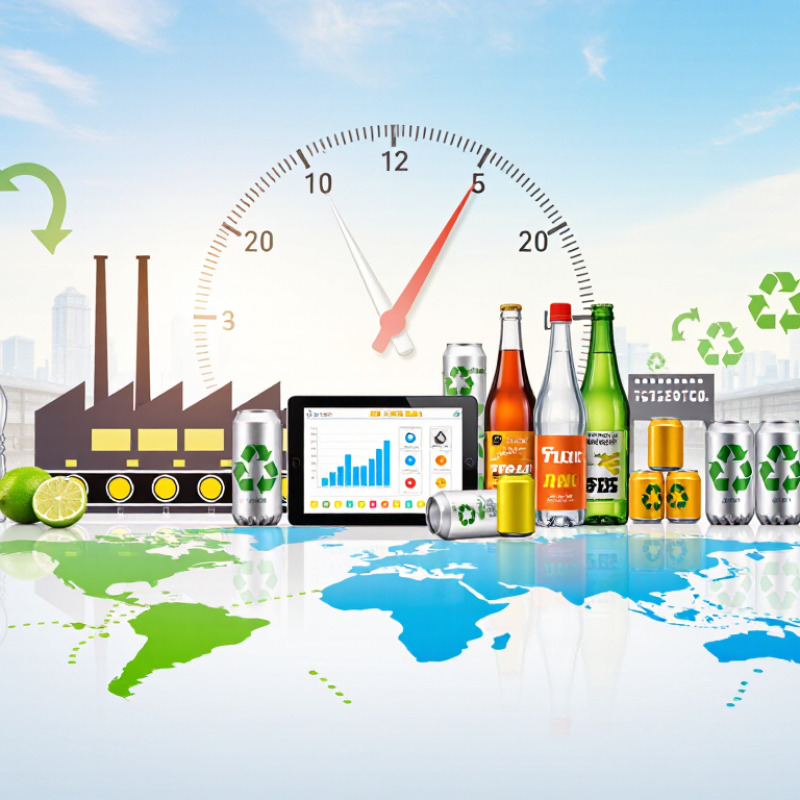
Top Beverage Industry Solutions for Global Buyers?

Definition and Scope of Beverage Industry Solutions

Beverage industry solutions are coordinated services, technologies, and processes that support beverage production and international purchasing. Their scope extends beyond ingredients or machinery. It includes product formulation, water treatment, filling, packaging, quality control, warehousing, logistics, and after-sales support. Global buyers need solutions that connect these stages clearly. A reliable provider should explain specifications, production capacity, testing methods, and delivery conditions without vague promises.

In practical sourcing work, buyers often compare more than price. They examine shelf-life evidence, batch traceability, packaging performance, and temperature requirements. They may also review certificates, audit records, labeling information, and communication procedures. Local market expectations can change the technical brief. For example, a lightweight package may reduce freight costs but require stronger protection during long transport. Small details matter.

The term is not perfectly fixed. Some suppliers use “solution” for one machine, while others describe a complete operating system. This difference deserves careful questioning. A complete proposal should show responsibilities, timelines, performance targets, and risks. It should also identify what happens when forecasts are wrong or a shipment is delayed. No plan is flawless. A pilot order, independent testing, and documented inspection can expose weaknesses before larger commitments. Buyers should keep reviewing the evidence, not simply trust polished presentations.

Key Technologies Shaping Global Beverage Production

Top Beverage Industry Solutions for Global Buyers?

Key Technologies Shaping Global Beverage Production

Modern beverage production depends on connected technologies, not isolated machines. Automated filling systems improve speed, accuracy, and hygienic control. Sensors monitor temperature, pressure, flow rate, and cleaning cycles in real time. This data helps operators identify small process changes before they affect an entire batch. Digital production records also support traceability across suppliers, facilities, and export markets.

Energy-efficient heat treatment is gaining attention. Advanced pasteurization systems can protect product quality while reducing water and power consumption. Membrane filtration supports clearer beverages and more consistent ingredient control. Robotics can handle repetitive packing tasks, especially where heavy cartons create safety concerns. However, automation is not a complete answer. Poor sensor calibration can produce confident but inaccurate data. That risk deserves regular testing.

Tips: Define measurable targets before purchasing equipment. Ask about cleaning validation, spare parts, operator training, and cybersecurity. Request trial data using ingredients similar to your own formula. Check whether the system can connect with existing production software. Small pilot projects often reveal hidden costs.

Artificial intelligence can forecast maintenance needs and detect unusual production patterns. Its value depends on clean data and experienced staff. Human review remains essential when quality, safety, or shelf stability changes. Global buyers should compare total operating costs, local service capability, documentation quality, and regulatory adaptability. The cheapest solution may become expensive when downtime, retraining, or rejected shipments appear.

Top Beverage Industry Solutions for Global Buyers? - Key Technologies Shaping Global Beverage Production

Technology comparison based on commonly reported operating ranges, food-safety practices, and beverage-processing applications

Technology or Solution Primary Production Function Typical Beverage Applications Typical Operating Parameters Key Measurable Benefits Resource or Quality Impact Important Implementation Considerations
Membrane Filtration Separates suspended solids, microorganisms, macromolecules, or dissolved components without necessarily using thermal treatment. Water treatment, clear juice, wine, beer, plant-based beverages, and ingredient concentration. Microfiltration: approximately 0.1–10 µm pore range.
Ultrafiltration: approximately 0.01–0.1 µm pore range.
Reverse osmosis: pressure commonly around 10–60 bar, depending on feed composition.
Improves clarification and can reduce thermal exposure. May help preserve flavor, color, and heat-sensitive compounds; concentrate streams can reduce transport volume. Requires pretreatment, membrane cleaning, control of fouling, and validation of microbial performance for the specific product.
High-Temperature Short-Time Pasteurization Uses controlled heat exposure to reduce vegetative pathogens and spoilage microorganisms. Milk-based drinks, juices, teas, sports drinks, liquid egg beverages, and other refrigerated products. Common product temperatures are approximately 72–95°C, with holding times from seconds to several minutes depending on the product and validated process. Supports validated microbial reduction while limiting treatment time. Heat recovery in plate or tubular systems can lower energy demand; excessive heating may affect flavor and nutrients. Time-temperature combinations must be validated for the product, package, target organisms, and local food regulations.
Aseptic Processing and Packaging Commercially sterilizes the product and package separately before filling in a controlled environment. Ambient-stable milk alternatives, juices, nutritional beverages, liquid foods, and selected functional drinks. Product treatment commonly uses ultra-high-temperature processing above 135°C for a few seconds, followed by aseptic filling. Enables extended ambient shelf life when the process and package are properly validated. Reduces dependence on refrigerated distribution; can lower cold-chain energy use. Requires validated sterilization, hygienic zoning, sterile-air management, package integrity testing, and strict operator procedures.
Clean-in-Place Systems Automatically cleans internal process surfaces without dismantling tanks, pipes, heat exchangers, or fillers. Breweries, dairies, juice plants, bottling lines, syrup rooms, and ingredient-processing facilities. Typical cycles include pre-rinse, caustic wash, intermediate rinse, acid wash where needed, final rinse, and sanitization. Improves repeatability and reduces manual cleaning exposure. Automated flow, temperature, chemical concentration, and time control can reduce water, chemicals, and cleaning labor. Cleaning validation should confirm flow velocity, temperature, concentration, coverage, conductivity, and microbiological results.
Inline Quality Monitoring Measures product and process variables continuously during production rather than relying only on laboratory sampling. Brewing, carbonated drinks, juices, dairy beverages, syrups, and water-treatment systems. Common measurements include temperature, pressure, flow, conductivity, pH, dissolved oxygen, turbidity, Brix, and carbon dioxide. Detects deviations earlier and supports reduced off-specification production. Can improve consistency, traceability, and process control while reducing delayed laboratory decisions. Sensors require calibration, hygienic installation, suitable materials, data integrity controls, and correlation with laboratory methods.
High-Shear Mixing and Homogenization Disperses ingredients and reduces particle or fat-droplet size to improve stability and mouthfeel. Plant-based drinks, flavored milk, emulsified beverages, nutrition drinks, dressings, and beverage concentrates. High-pressure homogenization commonly operates from approximately 100 to 300 bar, depending on formulation and equipment design. Improves emulsion stability, suspension uniformity, and sensory consistency. Can reduce settling and phase separation; excessive shear or heat may damage sensitive ingredients. Formulation order, solids content, viscosity, temperature, pressure, and recirculation time must be optimized together.
Heat Recovery and Regenerative Exchange Transfers heat between hot and cold process streams to reduce new heating or cooling demand. Pasteurization lines, breweries, dairies, hot-fill systems, and syrup-processing operations. Plate heat exchangers are commonly designed for counter-current flow and multiple regenerative sections. Can substantially reduce utility demand when sufficient hot and cold streams are available. Lower steam, hot-water, or chilled-water consumption; may also reduce associated greenhouse-gas emissions. Product viscosity, fouling tendency, pressure drop, hygienic design, and cross-contamination protection must be assessed.
Variable-Frequency Drives Adjusts motor speed to match the actual demand of pumps, fans, compressors, and conveyors. Water systems, refrigeration, air handling, pumping, blending, and packaging conveyors. Motor speed is varied electronically within the equipment’s safe operating envelope instead of running continuously at full speed. For centrifugal pumps and fans, power can decrease sharply as speed is reduced; affinity-law effects are significant. Helps reduce electricity use, mechanical stress, pressure surges, and unnecessary flow. Requires correct motor sizing, harmonic assessment, minimum-flow protection, and compatibility with hygienic process controls.
Water Reuse and Recovery Collects, treats, and reuses suitable water streams for non-product-contact or approved process applications. Final-rinse recovery, crate and floor washing, cooling systems, utilities, and selected non-contact operations. Treatment may include screening, filtration, disinfection, membrane processes, or combinations of these methods. Reduces freshwater withdrawal and wastewater discharge when water quality is properly controlled. Supports water-efficiency targets and can reduce sewer-related operating costs. Reuse streams must be segregated and risk-assessed; water intended for product contact requires stricter treatment and verification.
Lightweight Packaging Design Reduces the mass of packaging materials while maintaining product protection and line performance. Plastic, glass, metal, and multilayer beverage containers across still and carbonated products. Design parameters include container weight, wall thickness, top-load strength, burst resistance, oxygen transmission, and seal integrity. Can reduce material use and transport weight per filled container. May lower packaging-related emissions and logistics costs; recyclability depends on material design and local infrastructure. Must be validated for filling speed, pressure, pasteurization or hot-fill conditions, shelf life, stacking, and consumer safety.
Digital OEE and Production Analytics Combines availability, performance, and quality data to identify production losses and recurring downtime. Filling, labeling, secondary packaging, palletizing, and complete beverage production lines. Overall Equipment Effectiveness is commonly calculated as Availability × Performance × Quality. Creates a consistent method for comparing losses, changeovers, stoppages, and quality rejects. Supports preventive maintenance, shorter changeovers, improved scheduling, and better use of line capacity. Reliable sensor data, clear loss definitions, cybersecurity, operator adoption, and integration with production systems are essential.
Robotic Case Packing and Palletizing Automates repetitive handling of cases, trays, cartons, and finished-goods pallets. High-volume bottling, canning, carton, multipack, and warehouse operations. Performance depends on payload, reach, gripper design, case pattern, conveyor speed, and pallet configuration. Improves repeatability and reduces manual lifting in high-throughput operations. Can reduce ergonomic risk and support consistent pallet density, handling, and warehouse movement. Requires guarding, safety validation, changeover flexibility, reliable case detection, and coordinated conveyor control.
Data note: Operating values are representative industry ranges rather than universal specifications. Actual results depend on beverage formulation, equipment configuration, plant utilities, packaging format, hygiene validation, and applicable regulations.

Major Beverage Solutions for Processing, Packaging, and Distribution

Top Beverage Industry Solutions for Global Buyers?

Beverage processing begins with controlled water, accurate dosing, and hygienic equipment. Buyers should examine filtration, mixing, heating, and cleaning systems together. A reliable line records temperature, pressure, flow, and sanitation cycles. These records support quality checks and faster investigations. Small deviations matter. A syrup tank running two degrees too warm can change flavor consistency. Experienced suppliers should explain validation methods, maintenance access, and operator training. Brochures alone are not enough.

Packaging protects the product after processing. Common solutions include glass, cans, cartons, and flexible containers. Each format requires suitable filling, sealing, labeling, and inspection equipment. Packaging selection should consider shelf life, transport distance, local recycling systems, and storage conditions. A damaged seal can waste an entire shipment. Buyers should request real production samples, not only digital specifications. Line speed also needs careful review. Maximum speed is rarely the same as stable daily output.

Distribution depends on accurate scheduling and visible product information. Warehouses need batch tracking, pallet controls, and suitable temperature management. For chilled beverages, sensors should record conditions during loading and transit. Digital traceability can connect raw materials, production batches, packaging codes, and delivery records. It improves accountability, although implementation is not always smooth. Data gaps still occur during manual handovers. Global buyers should inspect those weak points before signing contracts. Supplier audits, spare-parts planning, and clear service response times can reduce costly interruptions.

Criteria for Selecting Reliable Global Beverage Suppliers

Global beverage buyers need suppliers that perform beyond a persuasive sales presentation. Reliability starts with verified production records, consistent specifications, and clear communication. Ask for recent certificates of analysis, ingredient origins, allergen controls, and batch traceability documents. Details matter.

A capable supplier should explain capacity by month, minimum order quantities, lead times, and packaging options. Request samples from normal production, not specially prepared batches. Test flavor, color, stability, and filling performance under realistic conditions.

Check whether the supplier understands labeling, import documentation, and safety requirements in your target market. Requirements can differ widely between countries.

I have found that response speed reveals operational discipline. A supplier who answers technical questions precisely is easier to manage during delays. Still, fast replies do not prove reliable manufacturing. Review independent audit results, inspection procedures, recall processes, and backup plans for key ingredients. Visit the facility when the order is important. A video call helps, but it cannot show every storage condition.

My own mistake was trusting a clean sample without checking three later batches. Consistency deserves evidence. Also examine payment terms, dispute procedures, and responsibilities under the chosen delivery agreement. A strong partnership leaves fewer assumptions, although no supplier relationship is completely risk-free.

Emerging Trends in International Beverage Industry Solutions

Top Beverage Industry Solutions for Global Buyers

International beverage solutions are shifting from volume growth toward measurable value. The IWSR Drinks Market Analysis 2024 reports that no-alcohol beverages are forecast to grow at a 7% compound annual rate from 2023 to 2028. This growth reflects changing routines, not only health concerns. Buyers now request lighter formulations, clear ingredient explanations, and reliable market-specific labeling.

Functional beverages are also gaining attention.

Innova Market Insights identified health and wellness as a major global beverage innovation driver in its 2024 trends report. Electrolytes, botanical ingredients, and added protein appear in more product briefs. However, “functional” claims require disciplined evidence. A vivid package cannot replace compliant testing. That gap deserves scrutiny.

Packaging is becoming a procurement issue.

The United Nations Environment Programme’s Food Waste Index Report 2024 estimated 1.05 billion tonnes of food waste in 2022, including avoidable losses across supply chains. Beverage buyers can respond with smaller trial shipments, demand forecasting, and packaging that protects freshness without excessive material. Refillable formats may work in controlled markets, but they are not universally practical. Reverse logistics remain expensive and uneven.

Digital traceability is another emerging solution.

Batch-level records can show production dates, ingredient origins, temperature exposure, and shipping delays. Yet data quality often varies between suppliers. The system is only as reliable as its weakest entry. Global buyers should ask for independent verification, realistic lead times, and contingency plans before signing long-term contracts.

FAQS

What should buyers inspect in a beverage processing line?

Inspect water treatment, dosing, mixing, heating, filling, and cleaning as one connected system. Check recorded temperature, pressure, flow, and sanitation cycles. A syrup tank only two degrees warmer may change flavor consistency. Ask how validation works. Brochures are not enough.

How can buyers judge a supplier’s technical capability?

Request maintenance access details, operator training plans, validation records, and real production samples. Ask suppliers to explain common failures and response times. Honest limitations matter. Impressive presentations can still hide weak support.

Which packaging formats can beverage producers consider?

Common formats include glass, cans, cartons, and flexible containers. Each requires compatible filling, sealing, labeling, and inspection equipment. Choose based on shelf life, transport distance, storage conditions, and recycling systems. A damaged seal can ruin a shipment.

Is maximum production speed a reliable planning figure?

Usually not. Maximum speed differs from stable daily output. Request trial-run data under realistic conditions. Include cleaning stops, changeovers, minor faults, and operator breaks. Real life is slower.

How can distributors protect beverage quality during transport?

Warehouses need batch tracking, pallet controls, and suitable temperature management. Chilled products require sensors during loading and transit. Review temperature records after delivery. Cold-chain gaps may appear during handovers.

What does digital traceability need to record?

It should connect ingredients, production batches, packaging codes, temperatures, shipping delays, and delivery records. Manual entries can create gaps. The weakest data entry may weaken the whole system. Independent checks are worth considering.

What beverage trends are attracting international buyers?

No-alcohol beverages are forecast to grow by about 7% annually from 2023 to 2028. Functional products also receive attention. Electrolytes, botanical ingredients, and added protein appear in more briefs. Claims still need reliable evidence.

How should buyers evaluate sustainable packaging options?

Consider smaller trial shipments, accurate demand forecasts, and packaging that protects freshness with less material. Refillable formats may work in controlled markets. They are not practical everywhere. Reverse logistics can remain expensive and uneven. The answer is rarely perfect.

Conclusion

Beverage Industry Solutions encompass the technologies, equipment, services, and operational strategies that support beverage production from raw material handling to final distribution. This overview explains how automation, digital monitoring, efficient processing systems, and sustainable utilities are reshaping global beverage manufacturing. It also examines practical solutions for mixing, treatment, filling, packaging, warehousing, and logistics, helping producers improve consistency, productivity, safety, and resource efficiency.

For global buyers, selecting reliable suppliers requires careful evaluation of product quality, technical expertise, customization capabilities, certifications, after-sales support, delivery performance, and total operating costs. The article also highlights emerging trends, including smart factories, data-driven quality control, recyclable packaging, energy reduction, water conservation, and flexible production lines. Together, these developments provide a clear framework for comparing international suppliers and choosing Beverage Industry Solutions that support long-term growth, responsible production, and changing consumer expectations.

Amelia

Amelia

Amelia is a seasoned marketing professional with a deep expertise in our company’s innovative products and services. With a keen eye for detail and a passion for storytelling, she plays a pivotal role in shaping our brand’s narrative through expertly crafted blog articles on our corporate website.......