Industry Insights & News
Stay informed with expert market trends, technical innovations in freeze-dried ingredients, and product development resources.
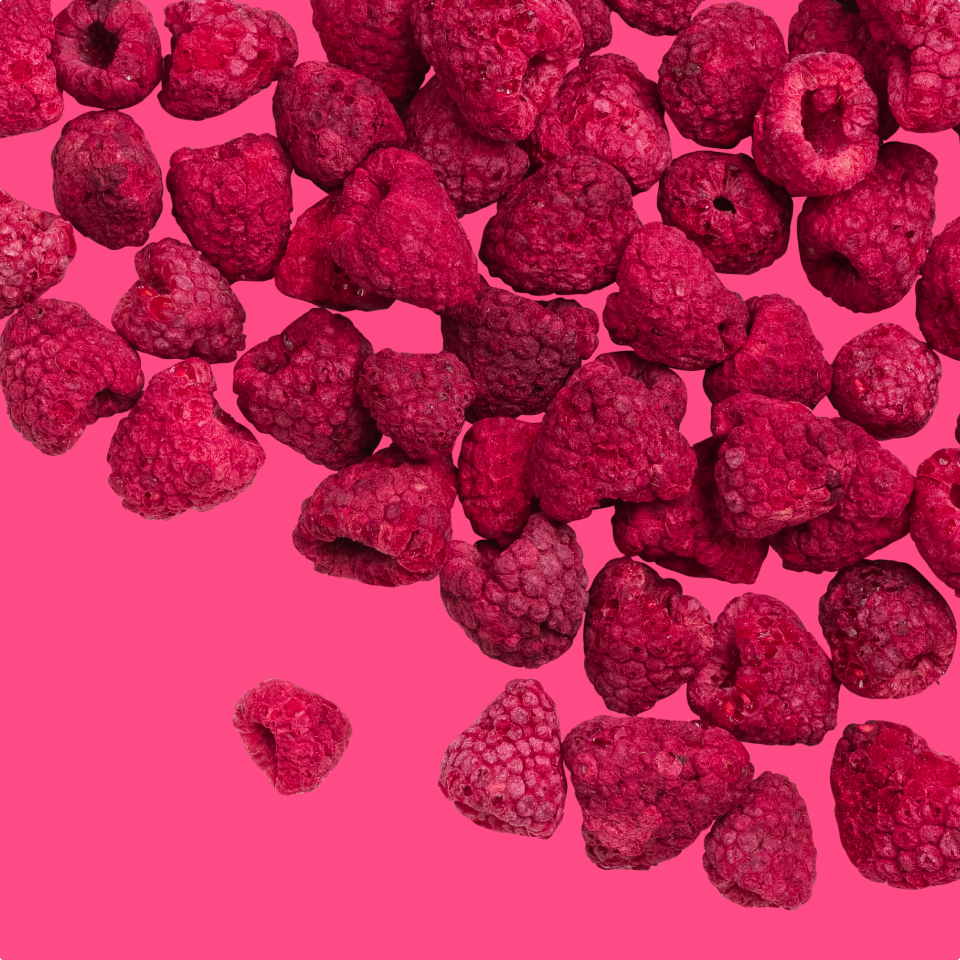
Top 10 Freeze Dried Berry Ingredients for Global Buyers
Table of Contents
- Freeze-Dried Berry Ingredients: Definition, Forms, and Key Features
- The Top 10 Freeze-Dried Berries by Flavor, Color, and Nutritional Value
- How Global Buyers Evaluate Berry Ingredient Quality and Specifications
- Sourcing, Certification, Packaging, and Storage Requirements
- Applications, Market Trends, and Selection Strategies for International Buyers
- FAQS
- Conclusion
- Related Posts
Global buyers are watching Freeze-Dried Berry Ingredients more closely than ever. Demand is rising across cereals, snack bars, confectionery, dairy alternatives, and premium beverage mixes. Yet the market is not as simple as colorful fruit pieces in a pouch.
Grand View Research reports continued growth in the global freeze-dried food market, driven by longer shelf life and convenient nutrition. Future Market Insights also identifies freeze-dried fruits as a fast-developing category, supported by clean-label purchasing and online food retail. However, market estimates vary by product definition and region. That difference matters.
Professor Mary Ann Lila, a leading berry researcher at North Carolina State University, has described berries as “nature’s little powerhouses.” Her work highlights the value of berry polyphenols, while USDA FoodData Central provides a reliable reference for nutrient composition. These sources support informed buying, but they do not replace supplier verification.
Quality begins with the raw fruit. A buyer should examine berry variety, harvest region, moisture level, water activity, color retention, particle size, microbiological results, and pesticide documentation. A bright strawberry powder may still show oxidation if its storage history is unclear. Small details matter.
This guide reviews ten Freeze-Dried Berry Ingredients for global buyers. It compares practical uses, sensory performance, supply considerations, and documentation needs. The ranking is not absolute. Application goals change everything.
Some buyers prioritize price. Others need vivid color, low moisture, or organic certification. The strongest choice is rarely the cheapest one. It is the ingredient that performs consistently from sample testing to full-scale production.
Freeze-Dried Berry Ingredients: Definition, Forms, and Key Features
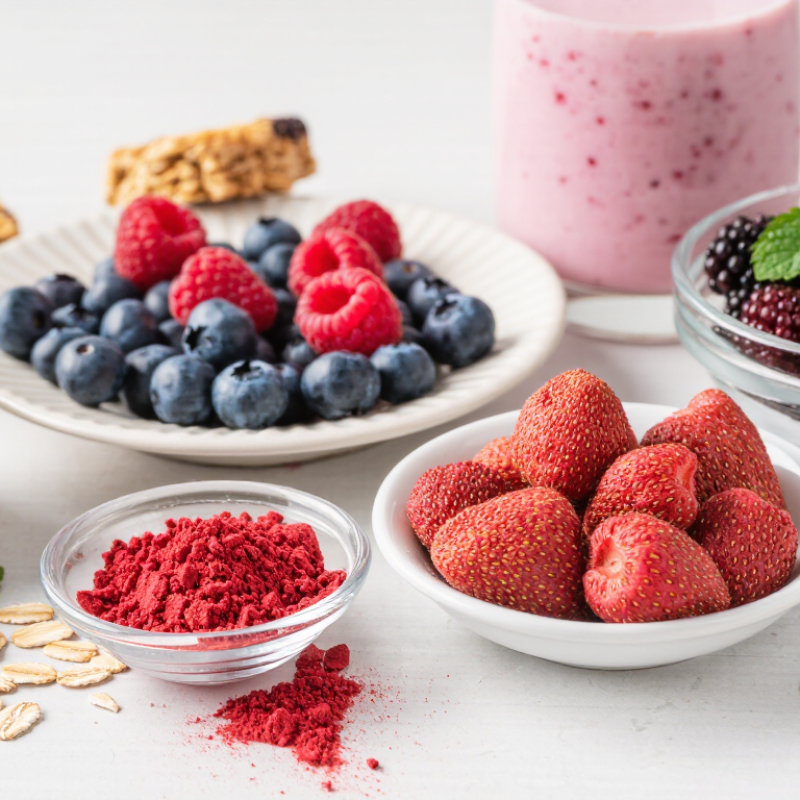
Freeze-dried berry ingredients are fruits processed under low temperature and vacuum. Ice changes directly into vapor, leaving a crisp, porous structure. This method protects much of the berry’s natural color, aroma, and shape. It also removes most moisture without heavy heat exposure. The result is lightweight and shelf-stable when properly packed. Not always perfect.
Global buyers usually select three forms: whole berries, pieces, and powder. Whole berries suit premium toppings and visual applications. Pieces blend well into cereals, bakery fillings, snack mixes, and chocolate products. Powder disperses easily in beverages, dairy recipes, sauces, and nutritional formulations. Particle size matters more than many buyers expect. Uneven pieces can affect mixing, texture, and finished appearance.
Key purchasing features include moisture content, water activity, color retention, aroma, breakage rate, and microbial results. Buyers should request a clear specification sheet, batch traceability, allergen information, and independent test records. Oxygen-resistant packaging helps protect the fragile structure during shipping. Storage conditions also matter; humidity can quickly soften the product. A bright color does not always prove superior quality. Some natural variation is unavoidable, especially between harvests. Careful sampling remains essential before approving large-volume orders.
Top 10 Freeze-Dried Berry Ingredients for Global Buyers
Freeze-Dried Berry Ingredients: Definition, Forms, and Key Features
The chart compares estimated vitamin C density in selected freeze-dried berry ingredients. Values are indicative calculations based on representative fresh-fruit nutrition data and an approximate 10:1 fresh-to-freeze-dried mass concentration ratio; actual values vary by cultivar, maturity, processing conditions, and specification.
Freeze-dried berry ingredients are fruits processed under low temperature and vacuum to remove water while retaining much of their original color, aroma, flavor, and structure. Common forms include whole berries, pieces, slices, granules, and powders. Key purchasing considerations include moisture level, particle size, color, microbiological safety, solubility, rehydration performance, packaging, and shelf life.
The Top 10 Freeze-Dried Berries by Flavor, Color, and Nutritional Value
Top 10 Freeze-Dried Berry Ingredients for Global Buyers
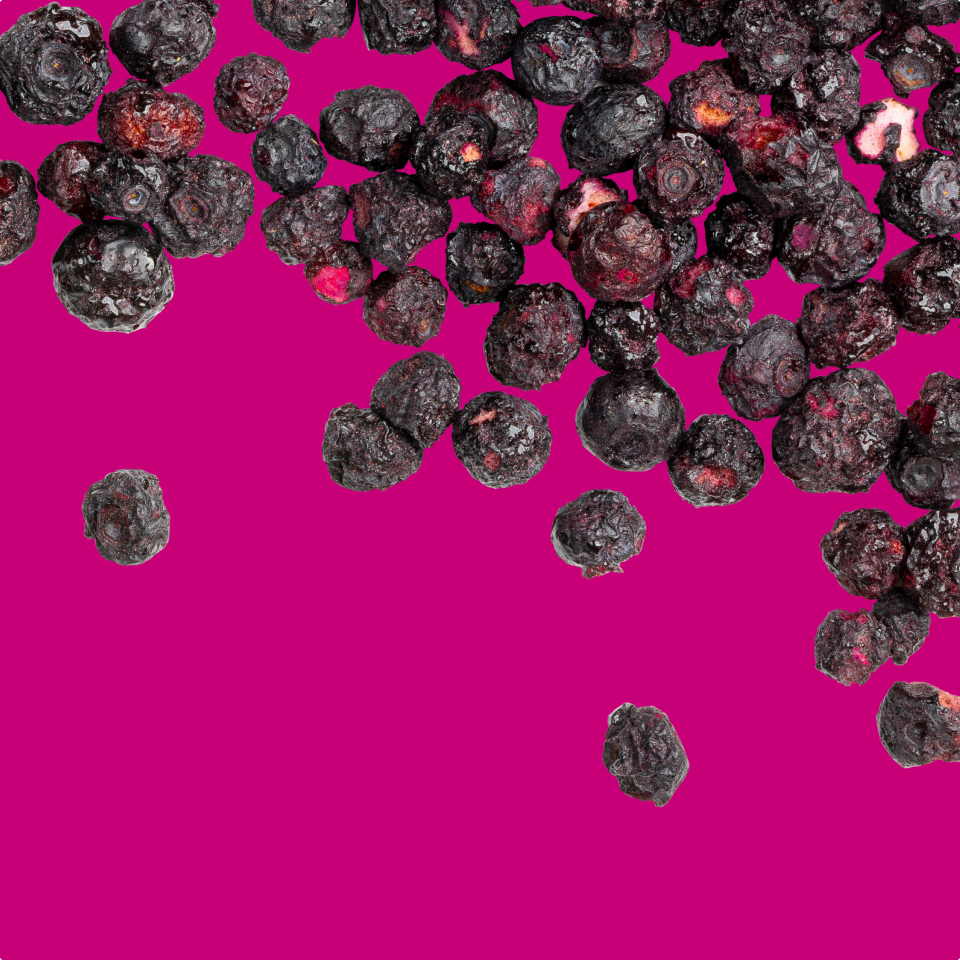
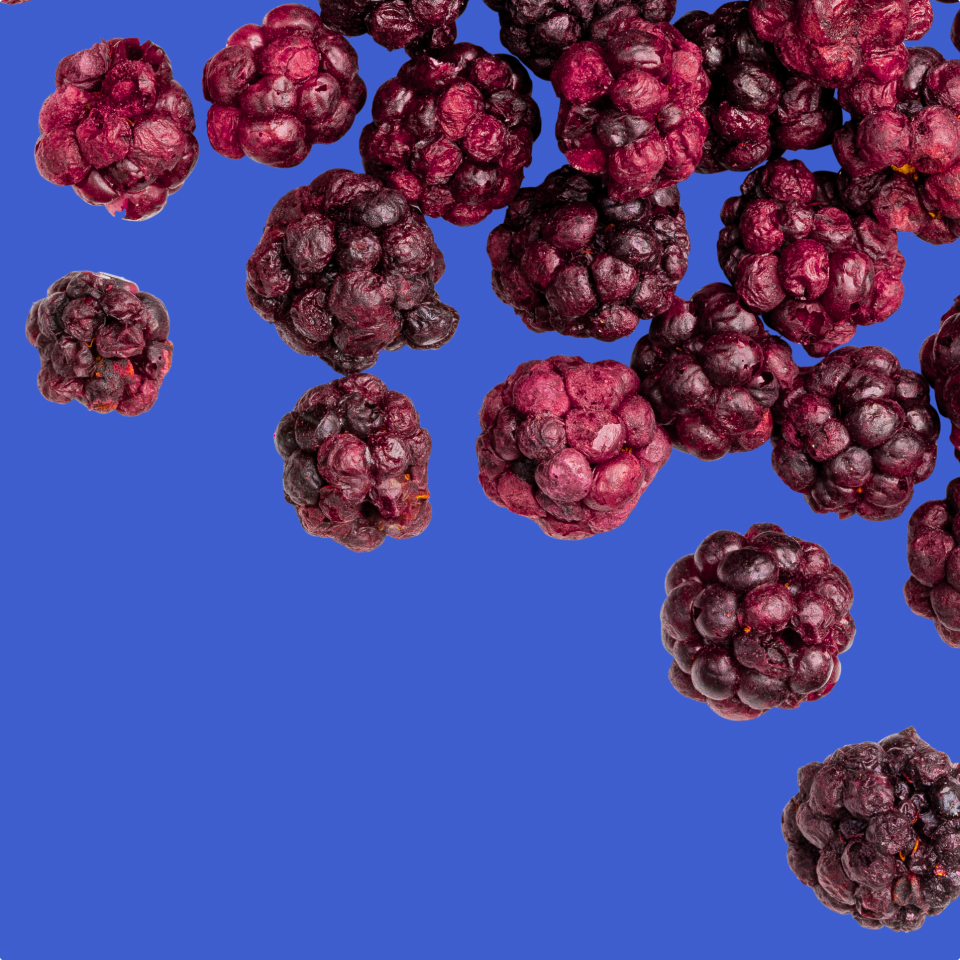
Among freeze-dried berries, strawberry leads with a bright red color, sweet aroma, and familiar flavor. Blueberry offers deep purple tones, gentle acidity, and useful anthocyanin content. Raspberry brings a sharp, fragrant taste and attractive red pieces. Blackberry gives darker color, mild sweetness, and a slightly earthy finish. Cranberry remains popular for its tart flavor, ruby color, and naturally occurring polyphenols.
These five ingredients work well in cereals, bakery fillings, snack mixes, and powdered beverages.
Buyers should check moisture, water activity, particle size, and microbiological specifications before approving a shipment.
Acai provides a dark purple appearance and earthy berry notes, but its flavor can vary by origin and processing. Goji berries offer orange-red color, mild sweetness, and carotenoids. Mulberry has a soft, honey-like taste with pale or dark natural color.
Blackcurrant is intensely purple, acidic, and rich in anthocyanins. Elderberry delivers deep color and tartness, although it usually needs careful formulation and controlled processing.
Flavor can shift.
In practical sourcing, color is not a complete quality signal.
Excessive heat may dull natural pigments and reduce sensitive nutrients, including vitamin C. Freeze-drying often protects structure and flavor better than conventional drying, but it does not prevent oxidation forever.
I have seen buyers focus on bright color while overlooking moisture migration in finished products. That mistake can create soft pieces and weaker aroma.
Reliable suppliers should provide batch testing, origin records, allergen information, and storage guidance. Nutritional values also depend on variety, harvest timing, and laboratory methods.
How Global Buyers Evaluate Berry Ingredient Quality and Specifications
Global buyers evaluate freeze-dried berries through measurable specifications, not appearance alone. A bright red powder can still disappoint. USDA FoodData Central lists raw strawberries at approximately 58.8 mg of vitamin C per 100 grams. Freeze-drying concentrates nutrients, but heat, oxygen, and storage time can reduce retention. Buyers should request vitamin C results, moisture, water activity, and reconstitution data from each lot.
Texture matters too. Particle size affects beverage dispersion, bakery performance, and filling accuracy. A practical specification may include mesh range, bulk density, foreign-material controls, and microbiological limits. Buyers commonly compare total plate count, yeast and mold, Salmonella, and E. coli results. Codex food hygiene guidance and ISO 22000 principles support documented hazard controls. However, testing methods can differ. One laboratory’s “not detected” result may use a different detection limit.
Tips: Request a recent certificate of analysis, product photos, origin records, and retained samples. Check whether results match the exact production lot. Ask for pesticide and heavy-metal testing when regulations or customer policies require it. USDA FoodData Central is useful for nutrient references, but it does not replace laboratory verification. Sensory approval should include aroma, color, crispness, and a simple water-reconstitution test. That test is imperfect, yet revealing. Also review packaging oxygen barriers and storage conditions. A low moisture result means little if the pouch absorbs humidity during transport.
Sourcing, Certification, Packaging, and Storage Requirements
Global buyers commonly source ten freeze-dried berry ingredients: strawberry, raspberry, blueberry, blackberry, cranberry, cherry, blackcurrant, redcurrant, acai, and goji. Each requires a defined botanical name, origin, harvest year, particle size, moisture limit, and microbiological specification. I would request pesticide-residue results for every lot, not only an annual certificate. Codex CXC 1-1969 supports preventive food-safety controls, while ISO 22000 or an equivalent HACCP system strengthens supplier verification.
Certification must match the destination market. Organic claims need valid certification and traceability through processing. Allergen controls still matter, even when berries are naturally allergen-free, because shared equipment can create risk. The USDA FoodKeeper database indicates that dried fruit quality declines faster after opening, so buyers should not treat freeze-dried ingredients as indefinitely stable. A certificate can look impressive. It can also hide weak sampling.
Packaging should block oxygen, moisture, light, and crushing. A foil-laminate pouch or high-barrier lined carton is often more reliable than plain plastic. Ask for oxygen and water-vapor transmission data, nitrogen-flushing records, seal-integrity tests, and pallet photos. Store sealed cases below 25°C, away from sunlight, with controlled humidity; validate these limits with real-time stability data. Desiccants help, but they cannot repair a poor seal. The 2023 USDA Food Loss and Waste data also shows why damaged or rejected food deserves attention: packaging failures create avoidable waste before production even begins.
Top 10 Freeze Dried Berry Ingredients for Global Buyers - Sourcing, Certification, Packaging, and Storage Requirements
| Berry ingredient | Common commercial forms | Typical sourcing regions | Key quality specifications | Typical certification and compliance requirements | Recommended packaging | Storage requirements | Main buyer applications |
|---|---|---|---|---|---|---|---|
| Strawberry | Whole, halves, slices, dices, powder | Europe, North America, South America, and Asia | Bright natural color, fresh strawberry aroma, crisp texture, low moisture, limited browning and broken pieces | HACCP-based food-safety system; GFSI-recognized certification often requested; pesticide-residue, microbiological, heavy-metal, and allergen controls; organic certification when sold as organic | High-barrier laminated pouch or foil-lined bag with heat seal; oxygen absorber or nitrogen flushing may be used | Cool, dry, dark warehouse; protect from humidity, oxygen, heat, and direct light; reseal opened packaging promptly | Cereal, granola, bakery, confectionery, dairy alternatives, smoothies, and snack mixes |
| Blueberry | Whole berries, pieces, granules, powder | North America, Europe, South America, and selected Asia-Pacific markets | Blue-purple color, characteristic flavor, uniform size, crisp bite, low moisture, and minimal stem or leaf material | Food-safety plan, traceability, pesticide-residue testing, microbiological testing, foreign-material control, and applicable import documentation | Moisture- and oxygen-barrier bulk bags inside cartons or lined drums; retail packs should include a reliable resealable closure | Store below normal room-temperature extremes in a low-humidity area; avoid temperature cycling and condensation | Breakfast cereals, protein bars, bakery fillings, chocolate, trail mixes, beverages, and powdered formulations |
| Raspberry | Whole, crumble, pieces, granules, powder | Europe, North America, and South America | Red to deep-red color, recognizable aroma, low moisture, controlled seed content, and limited crushing | HACCP or equivalent preventive controls; GFSI certification commonly requested by large retailers; pathogen, pesticide, heavy-metal, and foreign-material testing | High-barrier foil laminate or multilayer pouch; use internal dividers or suitable case packing to reduce abrasion | Keep tightly sealed in a cool, dry, dark place; minimize exposure to air because the porous pieces readily absorb moisture | Yogurt toppings, bakery, desserts, chocolate inclusions, snack products, and fruit powders |
| Blackberry | Whole, halves, pieces, crumble, powder | North America, Europe, and South America | Dark purple-black appearance, balanced sweet-tart flavor, low moisture, and acceptable drupelet integrity | Documented traceability, food-safety controls, pesticide-residue compliance for the destination market, and routine microbiological testing | Foil-lined or metallized high-barrier bags in cartons; nitrogen flushing is suitable for sensitive premium pieces | Dry ambient storage away from sunlight and strong odors; use first-in, first-out inventory management | Cereal, bakery, dessert decoration, snack blends, tea and beverage mixes, and nutraceutical powders |
| Cranberry | Whole, halves, pieces, granules, powder | North America, Europe, and selected South American growing areas | Ruby-red color, tart flavor, low moisture, defined particle size, and no unintended sweetener or oil coating in single-ingredient products | Ingredient identity confirmation; pesticide, microbiological, heavy-metal, and allergen controls; verify whether added sugar or oil is permitted by the specification | High-barrier laminated bags or lined cartons; packaging should prevent moisture pickup and color deterioration | Store sealed in a cool, dry, dark area; protect from humidity and heat, particularly for powders | Bakery, breakfast foods, snack mixes, sauces, beverage powders, supplements, and seasonal confectionery |
| Acai Berry | Pulp powder, freeze-dried powder, granules, and blended fruit pieces | Amazonian regions of South America | Purple color, characteristic earthy-fruity flavor, fine uniform powder, low moisture, and controlled fat oxidation | Supplier traceability and botanical identity; microbiological, pesticide, heavy-metal, and adulteration testing; organic certification where claimed | Opaque oxygen- and moisture-barrier foil pouch, preferably nitrogen flushed; small packs reduce repeated air exposure | Protect from oxygen, light, heat, and humidity; keep sealed after opening and follow the supplier’s validated shelf-life guidance | Smoothies, functional beverages, nutrition powders, yogurt, snack bars, and wellness formulations |
| Goji Berry | Whole berries, pieces, granules, and powder | China, Central Asia, and other temperate production areas | Orange-red color, mild sweet-tart flavor, low moisture, clean appearance, and controlled stem or leaf content | Enhanced pesticide-residue and contaminant screening may be required; include traceability, microbiological testing, and destination-market labeling compliance | Opaque high-barrier pouch or lined carton; use tamper-evident sealing for retail packs | Cool, dry, dark storage with humidity control; prevent contact with moisture after opening | Tea blends, snack mixes, cereals, bakery, supplements, herbal products, and functional food applications |
| Sour Cherry | Pitted halves, pieces, granules, and powder | Europe, North America, and parts of West and Central Asia | Deep red color, pronounced tart flavor, verified pit removal, low moisture, and consistent particle size | Pit-removal verification, foreign-material control, pesticide and microbiological testing, and allergen-management documentation | High-barrier bags with strong seals; bulk formats should use lined cartons or drums suitable for fragile pieces | Store sealed in a dry, cool, dark warehouse; protect against crushing and humidity during transport and handling | Bakery, chocolate, desserts, breakfast products, snack bars, beverage blends, and culinary sauces |
| Mulberry | Whole berries, broken pieces, granules, and powder | Asia, the Middle East, Europe, and selected North American regions | Natural white, red, or dark-purple color depending on variety; sweet flavor; low moisture; limited stems and foreign matter | Botanical identity, pesticide-residue, microbiological, heavy-metal, and foreign-material controls; organic documentation when applicable | Moisture-barrier pouch or lined carton; opaque packaging is preferred for colored powders and long-distance shipping | Keep dry and protected from heat and light; reseal immediately because the product can soften when exposed to humid air | Cereal, energy bars, confectionery, bakery, tea, smoothie blends, and natural-color applications |
| Blackcurrant | Whole, pieces, granules, juice powder, and fruit powder | Europe, New Zealand, and selected temperate regions | Dark purple color, intense tart aroma, low moisture, controlled seed and stem content, and stable powder flow | Food-safety certification, traceability, pesticide and microbiological testing, heavy-metal controls, and verification of any declared natural-color function | Opaque foil laminate or metallized pouch with strong moisture and oxygen barrier; bulk powder may require lined drums | Store tightly closed in a cool, dry, dark environment; minimize oxygen and humidity exposure to preserve color and aroma | Functional beverages, dairy products, confectionery, bakery, supplements, sports nutrition, and natural-color systems |
Buyer note: Exact moisture limits, microbiological criteria, shelf life, packaging atmosphere, and certification requirements should be confirmed against the product specification and the regulations of the destination market.
Applications, Market Trends, and Selection Strategies for International Buyers
Top 10 Freeze Dried Berry Ingredients for Global Buyers
Freeze dried strawberries, raspberries, blueberries, blackberries, cranberries, cherries, blackcurrants, elderberries, acai berries, and sour cherries serve different product needs. Whole pieces add visible color to granola, chocolate, bakery fillings, and snack mixes. Powders work well in yogurt, beverages, nutrition blends, and natural flavor systems. In pilot trials, strawberry pieces often deliver strong aroma, while blueberry powder provides a deeper purple tone. Results vary with harvest conditions.
International demand is moving toward clean-label ingredients, recognizable fruit content, and smaller inclusions for convenient foods. Buyers also seek stable supply, transparent origin records, and packaging that protects fragile pieces from humidity. However, “natural” color does not always mean consistent color. Seasonal changes can affect shade, acidity, and flavor intensity. This point deserves more attention during product development.
Selection should begin with the final application, not the ingredient list. Request a specification sheet, certificate of analysis, microbiological results, pesticide compliance documents, water activity, moisture level, and particle-size information. For export projects, check the inner liner, carton strength, pallet configuration, and expected transit conditions. Low water activity supports shelf stability, but it cannot replace good sealing. A sample may look excellent, yet perform poorly after opening. Test the ingredient in the actual recipe for at least several weeks. Also compare whole berries, slices, granules, and powders before fixing the purchase standard.
FAQS
Strawberry offers bright red color, sweet aroma, and a recognizable flavor. It suits cereals, fillings, snacks, and drink powders.
Blueberry adds deep purple color, gentle acidity, and anthocyanins. Its pieces can look almost violet under strong lighting.
High moisture can soften pieces and weaken aroma. Water activity helps predict stability during storage.
No. Color alone can mislead buyers. Heat, oxygen, or storage may damage nutrients despite attractive appearance.
Request moisture, water activity, particle size, bulk density, and microbiological results. The results should match the exact production lot.
Fine powder may disperse quickly in beverages. Larger pieces can provide stronger texture in cereals and snack mixes.
Review oxygen barriers, sealing quality, and storage guidance. A dry pouch can still absorb humidity during transport.
No process prevents oxidation forever. Sensitive nutrients may decline with heat, oxygen, time, or unsuitable storage.
Use laboratory results from the current lot. Reference tables can guide expectations, but they cannot replace testing.
Check aroma, color, crispness, and reconstitution in water. The test is imperfect, but revealing. Color still gets too much attention.
Conclusion
Freeze-Dried Berry Ingredients offer global buyers a convenient way to add natural flavor, vivid color, aroma, and nutritional value to food and beverage products. This article explains their definition, common forms such as whole pieces, slices, powders, and granules, and the key differences among ten popular options, including strawberry, raspberry, blueberry, blackberry, cranberry, blackcurrant, mulberry, goji berry, açai berry, and cherry. Each ingredient is compared by taste profile, color intensity, texture, antioxidant potential, and suitability for different applications.
The article also outlines how international buyers evaluate quality through moisture content, water activity, particle size, microbiological standards, traceability, and specification consistency. It covers sourcing considerations, certifications, packaging materials, storage conditions, shelf life, and transportation requirements. Finally, it reviews applications in snacks, cereals, bakery products, confectionery, beverages, supplements, and functional foods, while highlighting market trends and practical selection strategies for choosing reliable, stable, and cost-effective berry ingredients.

Blog Tags: