Latest News & Updates

Industry Insights & News

Stay informed with expert market trends, technical innovations in freeze-dried ingredients, and product development resources.


0%

Dairy Product Ingredients shape more than flavor. They influence texture, nutrition, stability, and how foods perform during processing. In a yogurt cup, milk proteins help create a thick body; in a cheese, fat and moisture affect softness and melt. Small details matter.

The scale is substantial. FAO’s 2024 Dairy Market Review estimated global milk production at about 944 million tonnes in 2023. That figure points to a vast supply chain, but volume alone does not explain ingredient quality. Processing choices matter too. Whey proteins, milk powders, lactose, and butterfat each behave differently when heated, mixed, or stored. Dairy scientist John Lucey’s research on milk structure supports a useful takeaway: its components interact as a system, rather than acting as isolated nutrients. That distinction matters to product developers and buyers alike.

For manufacturers, selecting ingredients means balancing function, nutrition, cost, and consistency. A protein concentrate may improve structure, while milk powder can add solids and support a fuller mouthfeel. Yet results depend on the recipe and process. Not always. A technically suitable ingredient may still create an unwanted texture or taste in a specific product. OECD-FAO’s Agricultural Outlook also tracks ongoing growth in global dairy production and consumption, underscoring why dependable sourcing and clear specifications matter. The practical question is not simply which ingredient is available, but what it contributes in the finished food. This overview examines those roles and the trade-offs behind them.
Why Are Dairy Product Ingredients Important?

What Are Dairy Product Ingredients?

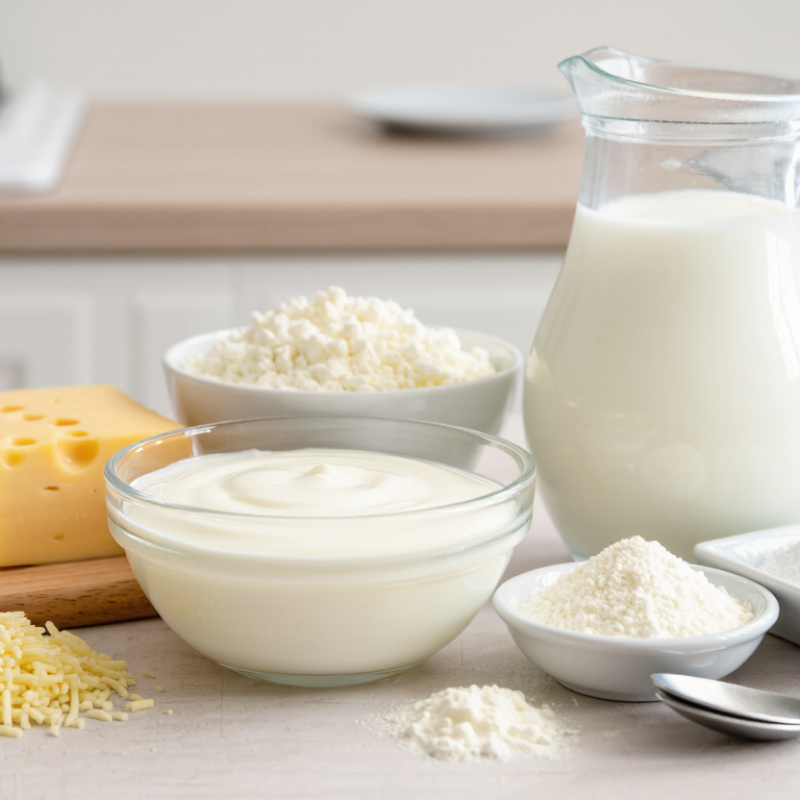
Dairy product ingredients are the components used to make foods such as yogurt, cheese, butter, and ice cream. Some are familiar: milk, cream, and butter. Others include whey, milk powder, lactose, and milk proteins such as casein. Not every product contains all of them.

Each ingredient can serve a different purpose. Milk supplies water, fat, protein, and natural sugars. Cream increases richness, while butter adds concentrated milk fat. Whey proteins can help create a smooth texture, and milk powder can add body without adding much liquid. Small but important. In fermented foods, selected cultures change milk’s acidity and develop its characteristic tang. Enzymes may help milk proteins form curds during cheesemaking.

Processing also affects which ingredients appear on a label. For example, a strained yogurt may contain fewer ingredients than a flavored one, which can include fruit, sugar, or thickeners. Ingredient names can feel technical, and they do not always reveal the full process. That is worth remembering. When comparing products, I look at both the ingredient list and the food itself: a short list is not automatically better, and texture or flavor can depend on how ingredients work together.

Which Ingredients Are Commonly Used in Dairy Products?

Milk and cream form the base of many dairy products, while starter cultures, enzymes, salt, and sweeteners shape their flavor and texture. FAO’s 2013 report, Milk and Dairy Products in Human Nutrition, describes cow’s milk as roughly 87% water and about 3.3% protein. That natural mix helps explain why milk proteins appear in products such as yogurt and cheese. Small amounts matter.

Yogurt commonly uses bacterial cultures to create its tangy taste and thicker body. Cheese often combines cultures with rennet or other coagulants, then salt; the exact choices vary by style. Cream and butter rely more on milk fat, while powdered milk and whey ingredients can boost protein or solids in processed foods. Pectin, starch, or other stabilizers may help keep a smooth texture, especially in products that might otherwise separate. Texture tells a story.

Some labels also list sugar, fruit preparations, flavors, or emulsifiers. These ingredients can improve taste, consistency, or shelf stability, but their presence alone does not reveal the full recipe. Processing matters, too. An ingredient list is useful, though it can make a simple food seem more complicated than it is. FAO’s figures describe typical milk, not every carton or batch; animal diet and processing can shift the composition.

How Do Dairy Ingredients Affect Product Structure and Flavor?

Dairy ingredients shape both the structure and flavor of a food. Milk proteins, especially casein and whey proteins, help bind water and support a smooth texture. In yogurt, that balance can make the spoonful feel thick rather than watery. In cheese, protein networks trap moisture and fat as curds form. Small changes matter. Too much heat can tighten those proteins and create a grainy texture.

Milk fat carries aroma and gives foods a fuller mouthfeel. Butterfat can soften the sharp edge of cultured flavors, while lower-fat recipes may taste thinner. Lactose adds mild sweetness and helps baked goods brown in the oven. Cultures contribute tang and can alter texture over time. The result depends on the whole recipe, not one ingredient alone. A richer product is not automatically better; it may feel heavy or hide delicate flavors. Even a careful formulation can behave differently with a new heating time or storage temperature. Testing small batches helps reveal those trade-offs, though it does not make every result perfectly predictable.

Why Are Dairy Product Ingredients Important? — How Do Dairy Ingredients Affect Product Structure and Flavor?

Dairy Ingredient Key Components Effect on Product Structure Effect on Flavor Common Uses
Milk Water, casein and whey proteins, milk fat, lactose, and minerals Provides both liquid and solids. Its proteins can contribute to body and, when heated, interact to form a set structure in products such as custards. Gives a mild, creamy dairy taste. Heating can create cooked or lightly browned notes, depending on the process. Yogurt, sauces, baked goods, desserts, beverages
Milk powder Concentrated milk proteins, lactose, minerals, and—depending on the type—milk fat Increases milk solids without adding much water. It can improve body, thickness, and water binding; the outcome depends on the formulation and processing conditions. Strengthens milky notes. Lactose and proteins can contribute to browning and cooked flavors during heating. Chocolate, bakery mixes, frozen desserts, yogurt, instant drinks
Casein and caseinates Casein proteins; caseinates are forms made more dispersible by combining casein with mineral salts Help stabilize fat-and-water mixtures and can add body. Their performance depends on acidity, salts, and heat treatment. Generally mild and milky; the surrounding ingredients and processing usually have a stronger effect on final flavor. Processed foods, creamers, sauces, protein-fortified products
Whey proteins Proteins that remain in the liquid whey after most casein is separated during cheesemaking Can bind water and form gels when heated under suitable conditions. They may also help stabilize foams and emulsions. Usually mild and slightly dairy-like. Heat treatment can produce more cooked notes. Yogurt, beverages, nutrition products, baked goods, desserts
Milk fat, cream, and butter Milk fat, with varying amounts of water and milk solids depending on the ingredient Add richness and lubrication. Solid and liquid fat proportions affect firmness, spreadability, aeration, and melting behavior. Contribute creamy, buttery aromas and help carry fat-soluble flavor compounds. Ice cream, pastry, sauces, spreads, confectionery
Lactose The naturally occurring sugar in milk Adds solids and influences sweetness, water availability, and texture. Lactose can crystallize in concentrated or frozen products if conditions allow. Less sweet than sucrose. It can participate in Maillard browning with proteins during heating, producing color and cooked or toasted notes. Milk powder, baked goods, confectionery, frozen desserts
Milk minerals Minerals including calcium and phosphate, present in forms that interact with milk proteins Influence protein stability, gel formation, and texture. Their effects depend on mineral balance, acidity, and processing. Usually subtle at typical food levels, but mineral balance can affect perceived taste and texture. Cheese, yogurt, dairy beverages, fortified foods
Cultured dairy ingredients Milk fermented by selected microorganisms; composition varies by culture and fermentation Acidification can thicken milk proteins and create a gel. The final texture depends on culture, solids, and processing. Develop tangy, cultured notes. Some cultures also produce aroma compounds that contribute buttery or fermented characteristics. Yogurt, cultured cream, fermented drinks, dressings, dips

Formulation note: Ingredient effects vary with concentration, acidity, temperature, processing, and interactions with other ingredients. The same dairy ingredient can therefore produce different textures and flavors in different products.

What Nutritional and Safety Roles Do Dairy Ingredients Play?

Dairy ingredients do more than add a creamy taste. Milk proteins, including casein and whey, provide essential amino acids and help give foods structure. Calcium supports bone health, while milk fat carries flavor and creates a smooth texture. Lactose supplies carbohydrate, though people with lactose intolerance may need products with reduced lactose or suitable alternatives.

In yogurt, cheese, sauces, and baked goods, dairy ingredients behave differently. Protein can thicken when heated; fat can soften a crumb and carry aroma. Cultures ferment lactose, producing acidity that shapes flavor and may slow some unwanted microbes. Not by itself. Fermentation does not guarantee safety, and recipes need appropriate processing.

Safety depends on more than ingredients. Pasteurized milk, hygienic handling, validated processing, and cold storage help control hazards. Dry milk ingredients also need moisture control and microbial checks. Milk proteins can trigger severe allergic reactions, so clear labeling and cross-contact prevention matter. It is easy to overvalue a clean label; it says little about handling. A stable texture does not prove a product is safe. Ingredient quality helps, but reliable process controls matter too.

How Are Dairy Ingredients Selected for Different Products?

Dairy ingredients are selected by the job they must do, not simply by their names. In yogurt, milk protein can support a thicker texture, while milk fat adds richness and a smoother feel. A spoonful should hold its shape without turning rubbery. Small changes in protein or fat levels can affect the result, so product developers test several blends.

Cheese, frozen desserts, and baked goods need different choices. Cheese makers consider how milk proteins respond during heating and setting. Ice cream formulations balance fat, milk solids, and water to limit icy crystals and create a creamy scoop. In bakery fillings, dairy powders may be chosen for flavor, color, and how they behave in a warm oven. Powder size matters, too; poorly dispersed powder can leave tiny lumps.

Taste tests matter. So do ingredient specifications, processing conditions, and consistency between batches. A formula that works in a small trial may behave differently in full-scale production. There is no perfect formula. Sometimes, improving one feature means giving up a little of another, and that trade-off deserves another test.

FAQS

What ingredients commonly appear in dairy products?

Milk and cream provide the base. Cultures, enzymes, salt, and sweeteners can shape flavor and texture. Small amounts matter.

Why does yogurt taste tangy and feel thick?

Bacterial cultures create tanginess and help thicken yogurt. Milk proteins also support a smoother, fuller spoonful.

What do cultures and coagulants do in cheese?

Cultures add flavor, while rennet or other coagulants help milk proteins set into curds. Salt may follow. Recipes vary.

How do milk proteins affect dairy texture?

Casein and whey proteins help bind water. They support smooth yogurt and help cheese curds hold moisture and fat. Too much heat can make the texture grainy.

What role does milk fat play?

Milk fat carries aroma and gives foods a fuller mouthfeel. It can soften sharp cultured flavors, though richer products may feel heavy.

Why do some dairy foods contain stabilizers?

Pectin, starch, or similar ingredients can help maintain a smooth texture. They may reduce separation, but they do not tell the whole recipe.

Why are dairy powders added to baked goods or fillings?

Milk powders can contribute flavor, color, protein, or milk solids. Poorly dispersed powder may leave small lumps in a warm filling.

Why can the same dairy formula behave differently between batches?

Heating time, storage temperature, processing, and ingredient variation can affect the result. Small trials help, but they cannot predict everything. Not quite.

Conclusion

Dairy Product Ingredients are the components that give dairy foods their structure, taste, nutritional value, and consistency. They may include milk, cream, milk proteins, fats, cultures, enzymes, and carefully chosen stabilizing or flavoring ingredients. Each serves a purpose: proteins can help create a firm or creamy texture, fat contributes richness, and cultures can develop distinctive flavors in fermented products.

These ingredients also influence a product’s nutrition, freshness, and quality. Their selection depends on the kind of dairy product being made and the desired balance of texture, flavor, and nutritional content. For example, a soft, smooth product may call for different ingredient proportions than a firm cheese. Understanding how ingredients work together helps explain why dairy products vary so widely while maintaining the qualities people expect.

Isabella

Isabella

Isabella is a seasoned marketing professional with a deep understanding of our company's innovative products and services. With years of experience in the industry, she excels in crafting insightful and engaging content that resonates with our audience. As a key contributor to our professional......